



Introduction
Artificial Intelligence (AI) is rapidly changing the way Human Resources (HR) departments operate across modern enterprises. From automating repetitive administrative tasks to enhancing recruitment and employee engagement, AI technologies are helping organizations improve efficiency, reduce operational costs, and make faster decisions. HR teams are increasingly using AI-powered tools for resume screening, workforce analytics, employee performance evaluation, onboarding, learning and development, and predictive talent management.
However, the growing use of AI in HR also introduces major ethical, legal, and operational concerns. Since HR processes directly impact employees and job candidates, organizations must ensure that AI systems operate fairly, transparently, and responsibly. Poorly governed AI systems can unintentionally reinforce discrimination, violate privacy regulations, and damage employee trust.
As businesses continue accelerating digital transformation initiatives, ethical AI has become one of the most critical priorities for HR leaders. Organizations are now focusing not only on AI adoption but also on building responsible AI frameworks that support compliance, reduce bias, and improve transparency.
The Growing Adoption of AI in HR
AI is becoming deeply integrated into nearly every aspect of HR operations. Enterprises are leveraging machine learning algorithms, natural language processing, predictive analytics, and intelligent automation to improve workforce management and streamline HR workflows.
Modern AI-powered HR systems can:
- Screen thousands of resumes within minutes
- Identify high-potential candidates
- Analyze employee sentiment and engagement
- Predict employee turnover risks
- Personalize learning and development programs
- Automate employee support through chatbots
- Improve workforce planning using predictive analytics
These capabilities significantly improve productivity and allow HR professionals to focus on strategic initiatives rather than administrative work. However, as AI systems become more influential in decision-making, concerns around fairness, accountability, and ethical governance continue to grow.
Organizations must understand that AI systems are not inherently neutral. The quality of AI outcomes depends heavily on the data used to train models, the algorithms being implemented, and the governance controls established during deployment.
Understanding Ethical AI in HR
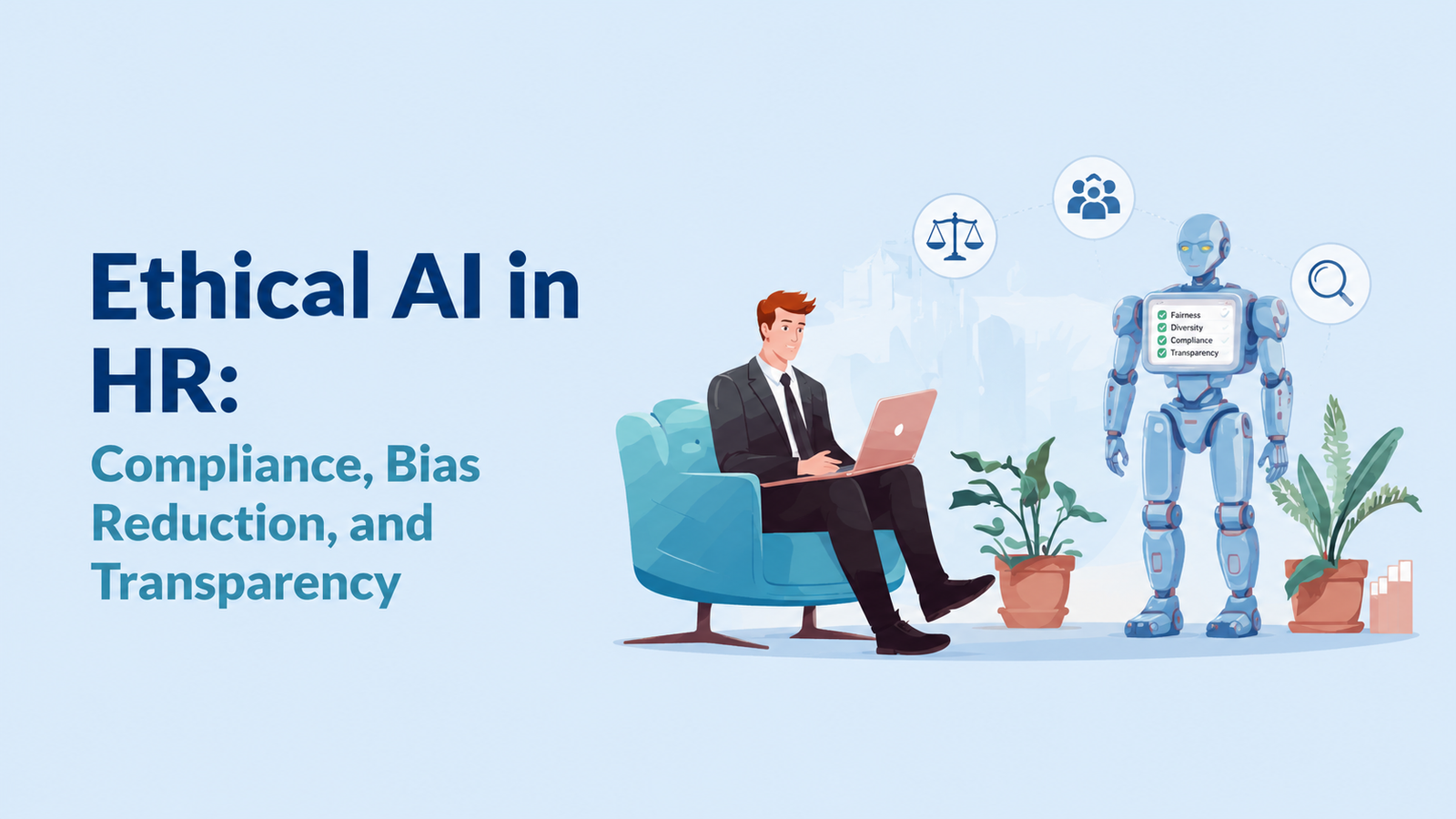
Ethical AI refers to the responsible development and use of artificial intelligence systems that align with fairness, accountability, transparency, privacy, and human rights principles. In HR, ethical AI ensures that technology supports unbiased and equitable workforce decisions while protecting employee interests.
HR decisions have a direct impact on people’s careers, compensation, promotions, opportunities, and workplace experiences. If AI systems make unfair or biased recommendations, the consequences can be severe for both employees and organizations.
Ethical AI in HR focuses on several key objectives:
- Preventing discrimination and unfair treatment
- Ensuring transparency in automated decisions
- Protecting employee privacy and sensitive data
- Maintaining regulatory compliance
- Preserving human oversight in critical decisions
- Building trust between employees and organizations
As governments introduce stricter AI regulations and employees become more aware of digital ethics, organizations must prioritize responsible AI practices to remain compliant and competitive.
The Challenge of Bias in AI Systems
One of the biggest concerns surrounding AI in HR is algorithmic bias. AI systems learn patterns from historical data. If the historical data contains biases or discriminatory patterns, AI models may replicate and even amplify those issues.
For example, if an organization historically hired candidates from specific universities or preferred certain demographic groups, AI recruitment systems trained on that data may continue favoring similar candidates. This creates a cycle where existing inequalities become embedded into automated systems.
Common Sources of AI Bias in HR
Historical Data Bias
Many organizations use historical workforce data to train AI models. If previous hiring, promotion, or performance evaluation practices were biased, AI systems may inherit those patterns.
Incomplete or Unbalanced Datasets
AI models require diverse and representative datasets. Limited or skewed data can produce inaccurate predictions that disadvantage certain groups.
Proxy Variables
Even when sensitive information such as gender or ethnicity is removed, AI systems may still use indirect indicators like postal codes, educational background, or career gaps as proxy variables.
Human Bias During Development
Bias can also emerge during the design and implementation phase. A lack of diversity within AI development teams may result in overlooked ethical risks and limited perspectives.
Lack of Explainability
Complex AI algorithms often function as “black boxes,” making it difficult for organizations to understand how decisions are made. Without explainability, identifying unfair outcomes becomes extremely challenging.
Compliance and Regulatory Challenges
As AI adoption increases, governments and regulatory authorities worldwide are introducing laws and policies to regulate automated decision-making systems. HR departments must ensure that AI technologies comply with evolving legal and compliance requirements.
Organizations operating globally often need to comply with multiple regulations, including:
- GDPR (General Data Protection Regulation)
- CCPA (California Consumer Privacy Act)
- India’s Digital Personal Data Protection Act
- Emerging AI governance regulations in the EU and other regions
Failure to comply with these regulations can lead to financial penalties, lawsuits, reputational damage, and employee distrust.
Key Compliance Concerns in HR AI Systems
Data Privacy and Protection
HR departments manage highly sensitive employee information, including personal identification details, compensation records, health information, and performance data. Organizations must ensure that employee data is collected, stored, and processed securely.
Consent and Transparency
Employees and candidates should be informed whenever AI systems are used in recruitment, evaluations, or workforce management processes. Transparency around AI usage is becoming a major compliance requirement.
Right to Explanation
Several regulations emphasize the importance of explainable AI. Employees may have the legal right to understand how automated decisions affecting them are made.
Accountability and Oversight
Organizations must clearly define who is responsible for AI-driven decisions. Human oversight remains essential, especially for hiring, promotions, compensation adjustments, and termination decisions.
The Importance of Transparency in HR AI
Transparency is one of the most critical components of ethical AI. Employees are more likely to trust AI systems when organizations openly explain how technology is being used and how decisions are made.
Lack of transparency can create fear, confusion, and resistance among employees. Candidates may also become skeptical of automated hiring systems if they believe the process is unfair or unclear.
Transparent AI systems help organizations:
- Build employee trust
- Improve accountability
- Reduce legal risks
- Strengthen employer branding
- Enhance decision-making credibility
Best Practices for AI Transparency
Explainable AI Models
Organizations should prioritize AI systems that provide understandable reasoning behind decisions rather than relying entirely on opaque algorithms.
Clear Communication Policies
Employees and candidates should receive clear information about:
- What data is being collected
- How AI systems use that data
- Whether humans are involved in final decisions
- How individuals can appeal automated outcomes
Human-in-the-Loop Decision Making
AI should support HR professionals, not replace them entirely. Human oversight helps ensure fairness and contextual understanding in sensitive decisions.
Documentation and Audit Trails
Maintaining detailed records of AI processes, training data, and decision logic helps organizations demonstrate compliance during audits and investigations.
Strategies for Reducing Bias in HR AI
Reducing bias requires continuous monitoring, governance, and improvement. Ethical AI implementation is not a one-time project but an ongoing organizational commitment.
Organizations can reduce AI bias through several strategies.
Use Diverse and Representative Data
Training data should include diverse demographic representation to improve fairness and reduce discriminatory outcomes.
Conduct Regular Bias Audits
AI systems should undergo regular testing to identify unfair patterns and performance disparities across different employee groups.
Implement Ethical AI Governance Frameworks
Organizations should establish clear AI governance policies covering fairness, accountability, privacy, and compliance.
Involve Cross-Functional Teams
Responsible AI implementation requires collaboration between HR, legal, compliance, cybersecurity, and data science teams.
Monitor Outcomes Continuously
AI systems should be monitored regularly to ensure recruitment, promotions, compensation, and performance evaluations remain fair and unbiased.
The Role of HR Leadership in Ethical AI
HR leaders play a central role in ensuring ethical AI adoption within organizations. They must balance technological innovation with employee rights, organizational values, and regulatory obligations.
Modern HR leadership requires a proactive approach toward AI governance, risk management, and workforce trust-building.
HR leaders should focus on:
- Developing responsible AI policies
- Educating employees about AI systems
- Partnering with compliance and legal teams
- Evaluating third-party AI vendors carefully
- Creating ethical review processes
- Ensuring continuous workforce communication
Organizations that treat ethical AI as a strategic priority are more likely to build sustainable and inclusive workplaces.
Vendor Risk and Third-Party AI Tools
Many enterprises rely on external vendors for AI-powered recruitment platforms, analytics solutions, and workforce management systems. However, third-party AI tools can also introduce compliance and ethical risks.
Before implementing AI solutions, organizations should evaluate vendors based on:
- Transparency practices
- Bias mitigation capabilities
- Security and privacy controls
- Compliance certifications
- Explainability features
- Audit and reporting support
- Data retention policies
Vendor due diligence is becoming increasingly important as regulators place greater accountability on organizations using AI systems.
Building Employee Trust Through Responsible AI
Employee trust is essential for successful AI adoption. Workers are more likely to embrace AI technologies when organizations demonstrate fairness, transparency, and accountability.
Trust can be strengthened through:
- Open communication about AI usage
- Employee education programs
- Clear ethical AI policies
- Human review mechanisms
- Transparent decision-making processes
- Regular compliance reporting
Organizations that prioritize employee trust often experience higher engagement, improved workplace culture, and stronger employer reputation.
Future Trends in Ethical AI for HR
The future of HR will continue to be shaped by AI innovation. However, ethical governance will become even more important as AI systems grow more sophisticated.
Several trends are expected to shape the future of ethical AI in HR:
- Real-time AI bias monitoring
- Increased regulatory oversight
- Explainable AI requirements
- AI ethics certification frameworks
- Stronger employee data rights
- Responsible AI reporting standards
- Greater human-AI collaboration
Organizations that invest early in ethical AI frameworks will be better prepared for future compliance requirements and workforce expectations.
Conclusion
AI is revolutionizing HR by improving efficiency, automating workflows, and enabling data-driven decision-making. From recruitment and onboarding to workforce analytics and employee engagement, AI technologies are helping organizations transform HR operations at an unprecedented pace.
However, the benefits of AI also come with significant ethical responsibilities. Without proper governance, AI systems can introduce bias, reduce transparency, compromise employee privacy, and create compliance risks. As AI becomes more deeply integrated into HR functions, organizations must ensure that technology is implemented responsibly and fairly.
Ethical AI in HR is no longer just a technological concern — it is a business imperative. Organizations that prioritize compliance, bias reduction, transparency, and human oversight will not only reduce legal and reputational risks but also build stronger employee trust and long-term organizational resilience.
By adopting responsible AI practices today, businesses can create more inclusive, transparent, and future-ready workplaces that balance innovation with ethical accountability.
