


For years, businesses have treated external hiring as one of the primary ways to acquire new capabilities. When an organization needs expertise in a new technology, stronger analytical capabilities, improved marketing strategies, or better operational leadership, the immediate response is often to look outside the company. Recruitment teams create job descriptions, hiring managers conduct interviews, and budgets are allocated to bring new talent into the organization.
However, there is another opportunity that many businesses overlook: the capabilities they already have within their existing workforce. Employees frequently develop valuable skills beyond their official job responsibilities. A sales professional may have advanced data analysis skills, an HR executive may understand automation technologies, and a finance professional may have experience with business intelligence tools. These capabilities can remain unnoticed simply because organizations continue evaluating employees according to their job titles rather than their broader potential.
This is where internal skills mapping becomes important. By identifying, documenting, and connecting employee capabilities with business requirements, organizations can uncover hidden talent, improve workforce flexibility, and make better decisions about hiring and employee development. Instead of constantly searching for capabilities externally, businesses can first understand what their existing workforce can contribute.
As technology, artificial intelligence, and business requirements continue to evolve, internal skills mapping is becoming an important part of modern workforce planning. The organizations that understand their existing talent landscape may discover that their next competitive advantage is already working inside their company.
What Is Internal Skills Mapping and Why Does It Matter?
Internal skills mapping is the process of identifying, documenting, assessing, and organizing the skills available across an organization’s existing workforce. It helps businesses understand what employees can currently do, what additional capabilities they are developing, and where those capabilities could support future business requirements.
Traditional workforce management generally focuses on job titles, departments, reporting structures, and predefined responsibilities. Skills mapping introduces a broader perspective by examining the actual capabilities employees possess, regardless of their official positions.
For example, consider an employee working in customer support who has developed strong analytical skills through regular customer interaction. This individual may understand customer behavior, identify recurring service issues, and recognize patterns that can help improve business processes. Although their official responsibility is customer support, their analytical abilities could also contribute to customer experience analytics or operational improvement initiatives.
Similarly, an administrative employee with experience in project management software may be able to support internal technology implementation projects.
This approach helps organizations move from position-based workforce management toward a more flexible, skills-based model. Internal Skills Mapping is becoming an important part of modern workforce management because it allows businesses to identify capabilities that traditional recruitment and performance management systems often overlook. By implementing Internal Skills Mapping, organizations can understand employee strengths, identify emerging expertise, and connect available talent with strategic business requirements. A well-structured Internal Skills Mapping strategy also helps companies make better decisions about employee development and workforce allocation.
Internal skills mapping matters because it helps organizations:
- Discover capabilities that are not reflected in traditional job descriptions.
- Identify internal candidates for emerging business requirements.
- Reduce unnecessary external recruitment when suitable skills already exist.
- Improve employee development through targeted learning opportunities.
- Support cross-functional collaboration and internal mobility.
- Identify workforce skill gaps before they affect business operations.
The objective is not to eliminate external hiring. It is to ensure that businesses understand their existing capabilities before deciding where additional talent is genuinely required.
Why Traditional Workforce Management Overlooks Hidden Employee Skills
Many organizations have capable employees but lack a structured approach to identifying their wider abilities. This problem often originates from traditional workforce management practices that define employees primarily through their designated positions.
When someone joins a company, their responsibilities are documented, their performance is evaluated against specific objectives, and their career progression is generally connected to their existing department. Over time, these structures can create limitations around how employees are perceived.
An employee may acquire new technical knowledge, develop leadership capabilities, or become proficient in a business application without those skills becoming part of their official employee profile. An effective Internal Skills Mapping framework also enables organizations to build a more transparent view of their workforce capabilities. Instead of depending entirely on employee designations, businesses can evaluate practical experience, technical knowledge, problem-solving abilities, and professional interests. This approach makes Internal Skills Mapping valuable for enterprise workforce planning because it connects individual capabilities with organizational priorities while creating better opportunities for professional growth.
Several factors contribute to this challenge.
1. Job Titles Create Narrow Perceptions of Employee Capabilities
Job titles communicate an employee’s primary responsibilities, but they rarely represent everything that individual can do.
For instance, a marketing specialist may have experience with SQL, dashboard development, and customer segmentation. However, the organization may continue viewing that individual exclusively as a marketing resource.
Internal skills mapping helps organizations recognize these additional capabilities and understand where they could create value.
2. Employee Learning Often Happens Outside Formal Training
Not every valuable skill comes from an official corporate training program. Employees regularly learn through independent research, practical experimentation, online courses, professional communities, and collaboration with colleagues.
These learning experiences can create capabilities that are never recorded in traditional HR systems.
Organizations need better ways to capture this information through employee skill profiles, development discussions, practical assessments, and project experience.
3. Departmental Silos Restrict Talent Visibility
Employees working in different departments may possess similar or complementary skills without knowing about each other’s capabilities.
A finance employee might understand data visualization, while an operations employee has experience with business process automation. If departments operate independently, these capabilities may never come together to support a common business objective.
Skills-based workforce planning can help break these organizational barriers by connecting employees according to their capabilities rather than their departmental positions alone.
The Changing Business Environment Is Making Internal Skills Mapping More Important
The capabilities organizations require are changing continuously. Artificial intelligence, cloud computing, automation, evolving customer expectations, and digital transformation are influencing how businesses operate.
A company may need AI literacy to improve productivity today, advanced data interpretation to strengthen decision-making tomorrow, and cross-functional problem-solving capabilities to support a new business initiative in the future.
Traditional recruitment cannot always respond quickly to these changing requirements. Hiring specialized professionals can involve lengthy recruitment cycles, onboarding, training, and additional workforce costs.
Meanwhile, existing employees may already possess some of the required capabilities or have the potential to develop them.
For example, an organization introducing a new business intelligence platform may discover that employees across finance, marketing, and operations already have experience with data reporting and visualization. Instead of assuming that an entirely new team is necessary, the business can identify suitable internal employees, assess their technical readiness, and provide additional training where required.
This is one of the most valuable applications of internal skills mapping: helping organizations understand the difference between capabilities they need to acquire and capabilities they can develop internally.
As business requirements change, organizations should regularly evaluate:
- Which skills are becoming more important to their operations?
- Which existing employees already demonstrate those capabilities?
- Which employees could develop the required skills through training?
- Where are the most significant workforce capability gaps?
- Which responsibilities could benefit from cross-functional collaboration?
This creates a more proactive approach to workforce planning rather than waiting for a skill shortage to become a recruitment problem.
How AI and Workforce Analytics Are Transforming Internal Skills Mapping
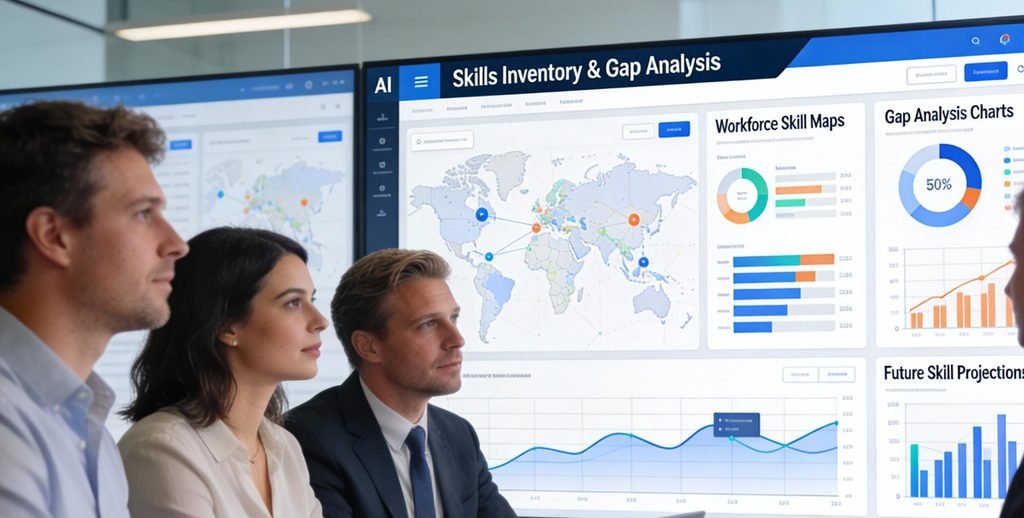
Artificial intelligence and workforce analytics are making it easier for organizations to identify, organize, and evaluate employee capabilities.
Traditional talent management systems often store information such as job titles, departments, qualifications, and employment history. Modern skills management approaches can bring together a broader range of information, helping organizations build a more detailed understanding of their workforce.
AI-supported talent management platforms can help analyze information from employee profiles, completed training, project experience, professional certifications, and declared interests. Depending on the available data and system capabilities, these platforms can identify potential skill matches between employees and business requirements.
For example, an enterprise planning to automate its recruitment operations may need employees with knowledge of workflow automation, data handling, and HR technology.
A skills-based system could help identify:
- HR professionals who have previously worked with recruitment automation.
- IT employees with experience implementing workflow tools.
- Operations specialists who understand process optimization.
- Employees interested in developing automation and AI capabilities.
This creates opportunities to bring together people from different departments instead of automatically initiating an external recruitment process.
The Role of AI in Identifying Hidden Workforce Capabilities
AI can support internal skills mapping through several practical applications.
Skills identification: Analyzing available employee information to identify capabilities that may not be represented in official job titles.
Skill matching: Connecting employee capabilities with project requirements, internal vacancies, and emerging business opportunities.
Skills gap analysis: Comparing current workforce capabilities with the skills required for future business initiatives.
Learning recommendations: Helping employees identify relevant training based on their existing capabilities and development goals.
Workforce forecasting: Supporting workforce planning by identifying capabilities that may become increasingly important as business requirements change.
However, AI should support rather than independently determine employee potential. Automated systems may overlook practical experience, misinterpret employee information, or rely on incomplete and outdated records.
Organizations should therefore combine technology with employee discussions, manager feedback, practical demonstrations, and regular skills validation. Data privacy, transparency, fairness, and employee consent should also be considered when collecting and processing workforce information.
The real value of AI-powered internal skills mapping comes from making workforce capabilities easier to understand and apply, not simply creating larger employee databases.
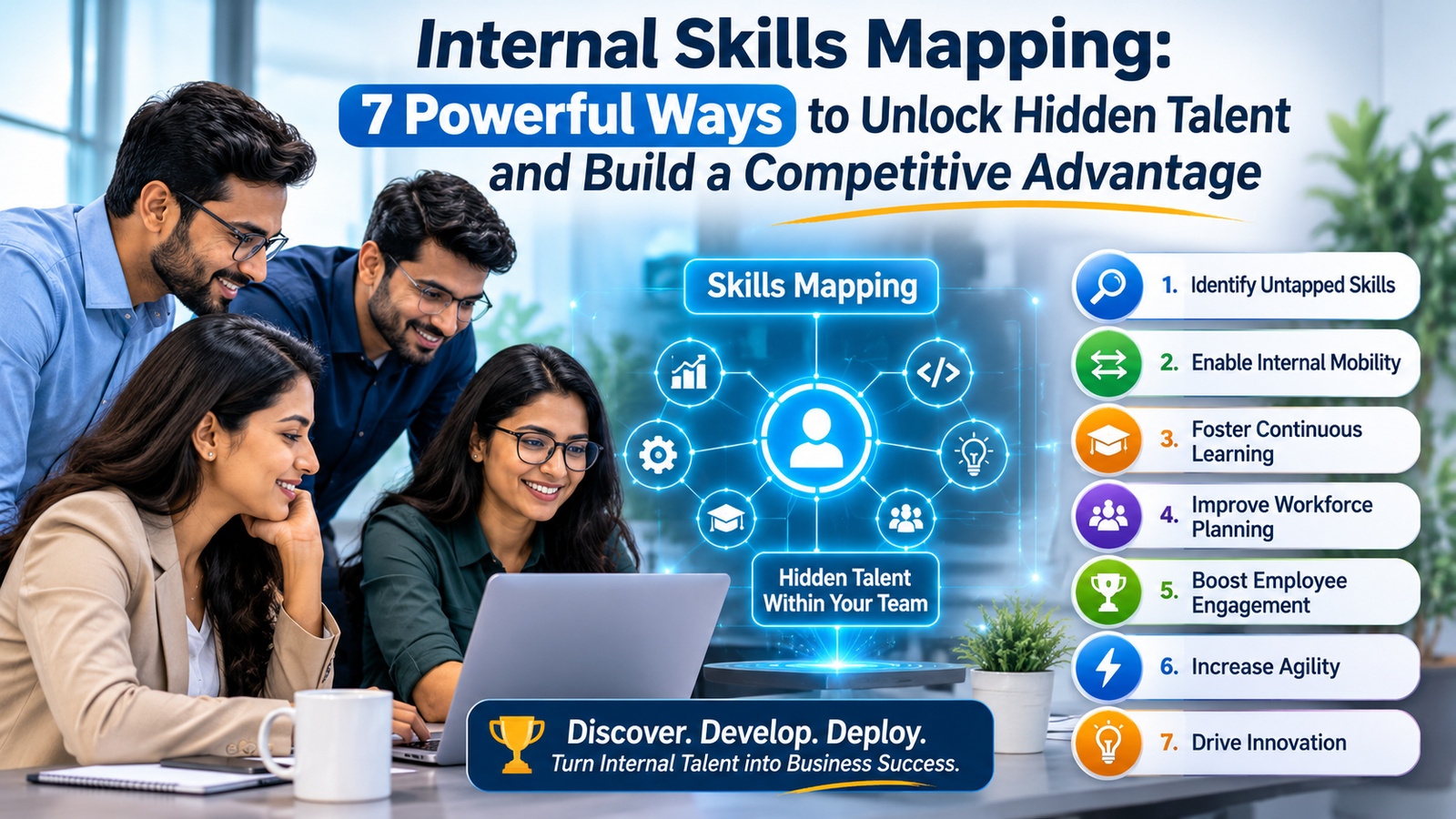
7 Powerful Ways to Unlock Hidden Talent Through Internal Skills Mapping
Identifying employee capabilities is only the first step. Organizations must also create practical opportunities to apply those capabilities where they can generate meaningful business value.
The following approaches can help enterprises turn internal skills mapping into an effective workforce strategy. With the growing adoption of enterprise technology, Internal Skills Mapping can become more effective through AI-powered workforce analytics. These solutions help HR teams organize employee capabilities, recognize skill patterns, and identify potential candidates for internal projects. Combining Internal Skills Mapping with workforce intelligence also allows organizations to understand where existing expertise can support digital transformation and operational improvement.
1. Build a Centralized Employee Skills Inventory
Organizations should establish a structured inventory that captures employee capabilities across departments.
This inventory should go beyond qualifications and official job responsibilities. It should include technical skills, business knowledge, soft skills, practical experience, certifications, and areas of professional interest.
For example, a technology company could maintain employee skill profiles covering:
- Programming languages and software development frameworks.
- Cloud platforms and infrastructure management.
- Data analysis and business intelligence.
- Project management and stakeholder communication.
- Cybersecurity and IT operations.
- Process automation and AI applications.
The information should be regularly reviewed and updated to reflect employees’ changing capabilities.
A centralized skills inventory provides managers and workforce planning teams with a clearer understanding of available talent and helps reduce dependency on assumptions about employee capabilities.
2. Introduce Skills-Based Internal Talent Mobility

Employees should have opportunities to contribute beyond their existing departments when their capabilities match organizational requirements.
Internal talent mobility allows businesses to move suitable employees into new projects, temporary assignments, cross-functional initiatives, or different roles based on their demonstrated skills and development interests.
Consider a finance professional who has experience with Power BI and advanced Excel reporting. Although their primary responsibility involves financial operations, they could contribute to a company-wide reporting improvement project.
Similarly, an HR employee with experience in data analysis could support workforce reporting initiatives.
Organizations can encourage this through:
- Internal project opportunities.
- Cross-departmental assignments.
- Temporary role rotations.
- Internal job marketplaces.
- Skills-based career development programs.
This approach allows employees to expand their professional experience while helping businesses access existing capabilities more effectively.
3. Connect Skills Mapping With Employee Upskilling
Not every workforce requirement can be addressed through existing expertise. Some employees may possess foundational knowledge but need additional training before taking on new responsibilities.
This is where internal skills mapping becomes closely connected with employee upskilling and reskilling.
For example, an organization planning to expand its AI adoption may identify employees who already understand data analysis, business processes, or automation concepts. These employees could receive targeted training in AI applications, prompt engineering, or workflow integration.
Instead of providing identical training to every employee, businesses can design learning opportunities around actual capability gaps.
A structured approach should include:
- Identifying the capabilities required for business priorities.
- Assessing the current skills available internally.
- Identifying employees with relevant foundational knowledge.
- Providing targeted learning and practical exercises.
- Evaluating whether employees can demonstrate the required capabilities.
This makes employee development more relevant to business objectives and helps organizations build capabilities progressively.
4. Encourage Cross-Functional Project Collaboration
Some of the most valuable business capabilities emerge when employees from different departments work together.
A marketing team may understand customer acquisition, a finance team may understand cost analysis, and an operations team may understand process efficiency. Combining these perspectives can produce stronger business solutions.
Internal skills mapping helps organizations identify people with complementary expertise and bring them together around specific projects.
For example, a company improving its customer onboarding process could involve:
- Marketing professionals with customer journey experience.
- Operations employees with process improvement knowledge.
- IT specialists with automation expertise.
- Finance professionals who can evaluate operational costs.
The result is a more collaborative environment in which employees contribute according to their capabilities rather than being restricted entirely by departmental boundaries.
5. Recognize Skills That Employees Develop Independently
Employees frequently acquire new capabilities outside their formal job responsibilities.
Some learn programming through independent projects, others complete professional certifications, and many develop practical expertise by experimenting with new technologies.
Organizations should create opportunities for employees to communicate these capabilities through skills assessments, employee development conversations, internal profiles, and practical demonstrations.
Managers should also encourage employees to discuss the technologies they are learning, the projects they have completed, and the types of responsibilities they would like to explore.
Recognizing independently developed skills can uncover valuable expertise that traditional performance evaluations may overlook.
6. Introduce Skills-Based Performance and Career Development
Performance management should consider more than whether employees have completed their assigned responsibilities.
Managers should also recognize problem-solving abilities, adaptability, technical development, collaboration, and the potential to take on new challenges.
This does not mean replacing performance targets with subjective assessments of potential. Instead, organizations should combine measurable performance outcomes with evidence of additional capabilities.
For example, an employee who consistently improves reporting processes, identifies operational inefficiencies, and helps colleagues adopt new software may demonstrate capabilities that extend beyond their formal position.
Recognizing these contributions can support more meaningful career development discussions and help employees identify possible future opportunities within the organization.
7. Use Skills Gap Analysis to Make Smarter Hiring Decisions
Internal skills mapping should ultimately help organizations make better decisions about workforce investment.
Before opening a new recruitment position, hiring managers should understand whether the required capabilities already exist internally or could be developed within a reasonable timeframe.
A practical skills gap analysis can categorize requirements into three groups:
| Capability category | Business response |
|---|---|
| Skills already available internally | Identify suitable employees for relevant projects or roles |
| Skills that can be developed | Provide targeted training, mentoring, or reskilling |
| Skills unavailable internally | Recruit external specialists or partners |
This approach helps businesses distinguish between genuine talent shortages and capability gaps caused by limited workforce visibility.
External recruitment remains essential when specialized expertise is unavailable internally. However, a structured assessment can prevent organizations from overlooking existing employees who may already meet some or most of the requirements.
Practical Business Use Cases of Internal Skills Mapping
The value of internal skills mapping becomes clearer when organizations apply it to real business challenges. It is not simply an HR initiative or an employee development exercise. It can support technology adoption, operational improvement, digital transformation, and enterprise-wide workforce planning.
Here are several practical applications.
Use Case 1: Digital Transformation and Technology Adoption
An enterprise planning to modernize its technology infrastructure may require expertise in cloud computing, cybersecurity, automation, and data management.
Rather than immediately recruiting an entirely new team, the organization can assess existing employees to identify those with relevant technical experience.
IT support professionals may already understand infrastructure management, while software developers may have experience with cloud platforms. Additional training and specialist recruitment can then address the remaining capability gaps.
Use Case 2: Improving Business Process Automation
A company looking to automate repetitive administrative processes may discover that employees across HR, finance, and operations already have experience with automation tools.
By identifying these employees, the business can establish a cross-functional automation team that understands both the technology and the processes being improved.
This helps ensure that automation initiatives are informed by practical operational knowledge rather than technology requirements alone.
Use Case 3: Strengthening Data-Driven Decision-Making
Businesses increasingly depend on data to understand customers, monitor operational performance, and make strategic decisions.
Internal skills mapping can identify employees with experience in reporting, statistical analysis, data visualization, and business intelligence.
These employees can support analytics initiatives, collaborate with technology teams, and help departments make better use of available business information.
Use Case 4: Improving Leadership and Project Management Capabilities
Leadership potential is not always limited to employees holding managerial positions.
Employees who regularly coordinate projects, resolve operational challenges, mentor colleagues, and manage stakeholder relationships may demonstrate valuable leadership capabilities.
Organizations can identify these individuals and provide opportunities through project ownership, mentoring, and leadership development programs.
How to Implement an Effective Internal Skills Mapping Strategy
A successful internal skills mapping initiative requires more than introducing a new HR platform or collecting employee information. Businesses need a structured approach that connects workforce capabilities with actual organizational priorities.
The following implementation framework can help.
Step 1: Identify Current and Future Business Requirements
Begin by understanding the capabilities the organization needs to achieve its strategic objectives.
For example, a business planning to expand its digital operations may require stronger capabilities in cloud infrastructure, cybersecurity, data analytics, and automation.
Workforce planning teams should collaborate with department leaders to identify both immediate requirements and anticipated future skill needs.
Step 2: Assess Existing Employee Capabilities
Collect information about employee skills through multiple sources, such as:
- Employee self-assessments and professional development profiles.
- Previous project experience and demonstrated performance.
- Professional certifications and completed training.
- Manager feedback and practical skill evaluations.
- Employee interests and future career aspirations.
Using multiple sources helps organizations develop a more reliable picture of workforce capabilities.
Step 3: Create a Skills-Based Workforce Database
Organize the collected information into a centralized skills database or talent management platform.
Each employee profile should ideally capture relevant capabilities, proficiency levels, work experience, certifications, and development interests.
The system should also allow employees and managers to update information when new skills are acquired.
Step 4: Identify Capability Gaps
Compare the skills available internally with the capabilities required for current and upcoming business initiatives.
This process helps identify:
- Capabilities that are already available.
- Skills that require further development.
- Employees who could transition into new responsibilities.
- Areas where external hiring is necessary.
Step 5: Connect Employees With Business Opportunities
Once relevant capabilities have been identified, organizations should create opportunities for employees to apply them.
These opportunities could include internal vacancies, project assignments, mentoring programs, temporary role rotations, and cross-functional initiatives.
The process should account for employee workload, managerial approval, compensation, and recognition.
Step 6: Monitor Progress and Update Skills Information
Employee capabilities change as people gain experience, complete training, and work with new technologies.
Organizations should periodically review their skills databases and measure whether internal talent initiatives are producing meaningful outcomes.
Possible indicators include:
- Internal mobility and project participation.
- Completion of targeted training programs.
- Time required to fill internal positions.
- Skills gap closure.
- Employee development and retention trends.
- Reduction in avoidable external recruitment.
These measures help organizations understand whether internal skills mapping is contributing to business objectives.
Challenges Businesses Must Address When Adopting Skills-Based Workforce Planning
Although internal skills mapping offers significant opportunities, organizations should recognize the practical challenges involved in implementing it.
A poorly managed initiative can become another administrative exercise that collects employee information without creating meaningful career or business opportunities. Successful Internal Skills Mapping requires continuous collaboration between HR teams, department managers, and employees. Organizations should treat Internal Skills Mapping as an ongoing business process rather than a one-time employee assessment. Regularly updating employee profiles ensures that Internal Skills Mapping reflects newly acquired expertise, changing business priorities, and future workforce requirements.
Inaccurate or Outdated Skills Information
Employee capabilities change over time, and skills databases can quickly become outdated if they are not maintained.
Organizations should establish regular review processes and encourage employees to update their profiles when they complete training or acquire new experience.
Managerial Resistance and Departmental Ownership
Some managers may hesitate to release capable employees for cross-functional projects because they depend on those individuals for their existing responsibilities.
Senior leadership should establish clear guidelines for internal mobility and encourage collaboration between departments.
Lack of Employee Participation
Employees may hesitate to share additional capabilities if they believe doing so will result in extra responsibilities without recognition or career benefits.
Businesses should communicate how skills information will be used and ensure that employees have meaningful opportunities to benefit from the process.
Overdependence on AI-Based Assessments
Automated skills assessments cannot always capture practical experience, creativity, adaptability, or problem-solving abilities.
AI recommendations should therefore be validated through human discussions, relevant work samples, and opportunities to demonstrate capabilities.
Workload and Capacity Constraints
Identifying an employee with the right skills does not automatically mean that person has the availability to take on another responsibility.
Organizations must consider existing workloads, project priorities, manager coordination, and appropriate recognition before assigning additional work.
Addressing these challenges is essential to building a sustainable skills-based workforce rather than simply creating another talent management database.
The Future of Workforce Planning: Moving From Job-Based to Skills-Based Organizations
The traditional relationship between employees and job responsibilities is gradually becoming less rigid as businesses adopt more flexible working models and technology-driven operating structures.
Organizations increasingly need people who can collaborate across departments, learn new technologies, and adapt their capabilities to changing business requirements.
In this environment, workforce planning needs to evolve beyond asking how many employees are required for each department.
Businesses should also understand which skills are available, where those skills can be applied, and what capabilities will be needed in the future.
Internal skills mapping provides a foundation for this transition.
A skills-based organization does not necessarily eliminate traditional departments or job titles. Instead, it introduces greater flexibility in how employees contribute to projects, business initiatives, and organizational priorities.
For enterprise leaders, this creates several important opportunities:
- More flexible workforce allocation: Employees can contribute to projects based on their capabilities and availability.
- Better talent investment: Learning programs can target specific capability gaps rather than relying exclusively on generic training.
- Stronger workforce resilience: Organizations can develop broader internal capabilities to respond to changing business conditions.
- Improved career opportunities: Employees can explore new responsibilities without depending entirely on formal promotions.
- More informed recruitment: Hiring decisions can be based on verified capability gaps rather than assumptions about existing talent.
As AI and enterprise technology continue to influence how work is performed, organizations that understand their workforce capabilities will be better positioned to make informed talent decisions.
Conclusion
The next competitive advantage for many businesses may not come from expanding recruitment budgets or continuously searching for external expertise. It may come from recognizing the skills, knowledge, and capabilities that already exist within their workforce.
Internal skills mapping gives organizations a structured way to discover hidden employee talent, identify workforce gaps, improve internal mobility, and connect people with opportunities that match their abilities. It also helps businesses make more informed decisions about employee development, technology adoption, and external recruitment.
However, identifying skills is only the beginning. Organizations must create an environment where employees can demonstrate their capabilities, develop new expertise, and contribute beyond the boundaries of their existing job descriptions. AI-powered workforce analytics and skills management platforms can support this process, but meaningful results depend on effective leadership, employee participation, and practical opportunities for growth.
External hiring will continue to play an important role, especially when businesses need specialized expertise that is unavailable internally. The difference is that organizations should make these decisions with a clearer understanding of their existing capabilities.
Ultimately, successful workforce planning is not just about finding the right people. It is about understanding the people already available, recognizing what they can contribute, and giving them the opportunity to create greater business value.
The most important question for business leaders is no longer simply, “Who should we hire next?” It is also, “What untapped capabilities are already inside our organization, and how can we put them to work?” Ultimately, Internal Skills Mapping provides businesses with a practical foundation for building a skills-based organization. When supported by appropriate technology, employee engagement, and leadership commitment, Internal Skills Mapping can help companies unlock hidden talent and improve workforce agility.
Frequently Asked Questions
1. What is internal skills mapping?
Internal skills mapping is the process of identifying, documenting, and evaluating the capabilities employees possess within an organization. It helps businesses understand available workforce skills and connect them with current and future business requirements.
2. Why is internal skills mapping important for businesses?
Internal skills mapping helps organizations discover hidden employee capabilities, improve workforce planning, identify skill gaps, support internal mobility, and make better hiring decisions. It can also help reduce unnecessary recruitment and improve employee development.
3. How does AI support internal skills mapping?
AI can analyze employee profiles, training records, project experience, and other relevant workforce information to identify potential skills, recommend internal candidates, highlight capability gaps, and suggest learning opportunities. Human validation remains important to ensure accuracy and fairness.
4. What is the difference between skills mapping and skills gap analysis?
Skills mapping identifies the capabilities currently available within an organization. Skills gap analysis compares those capabilities with the skills required to achieve business objectives. Both processes help organizations develop effective workforce strategies.
5. How can companies identify hidden employee skills?
Companies can identify hidden skills through employee self-assessments, manager discussions, training records, professional certifications, project experience, practical assessments, and employee development conversations. Centralized skills databases can help organize this information.
6. Can internal skills mapping reduce recruitment costs?
Yes. Internal skills mapping can help businesses identify existing employees who may be suitable for new positions or projects. It can also reveal opportunities to develop internal talent before investing in external recruitment. However, external hiring remains necessary when genuine capability gaps exist.
7. How does internal skills mapping improve employee retention?
It helps employees discover new career opportunities, participate in cross-functional projects, and apply skills beyond their current responsibilities. These opportunities can support professional development and help employees see a longer-term future within the organization.
8. What technologies are used for internal skills mapping?
Organizations may use human resource management systems (HRMS), talent management platforms, learning management systems (LMS), workforce analytics solutions, internal talent marketplaces, and AI-powered skills intelligence platforms to manage employee capabilities.
9. How often should organizations update their employee skills database?
Organizations should review skills information periodically and encourage employees to update their profiles whenever they acquire significant new capabilities, complete certifications, or gain relevant project experience. The review frequency should reflect how quickly the organization’s skills requirements change.
10. What is the first step toward building a skills-based organization?
The first step is understanding the organization’s current and future business requirements. Businesses can then assess existing employee capabilities, identify skill gaps, and create opportunities for employees to develop and apply their skills across the organization.
