


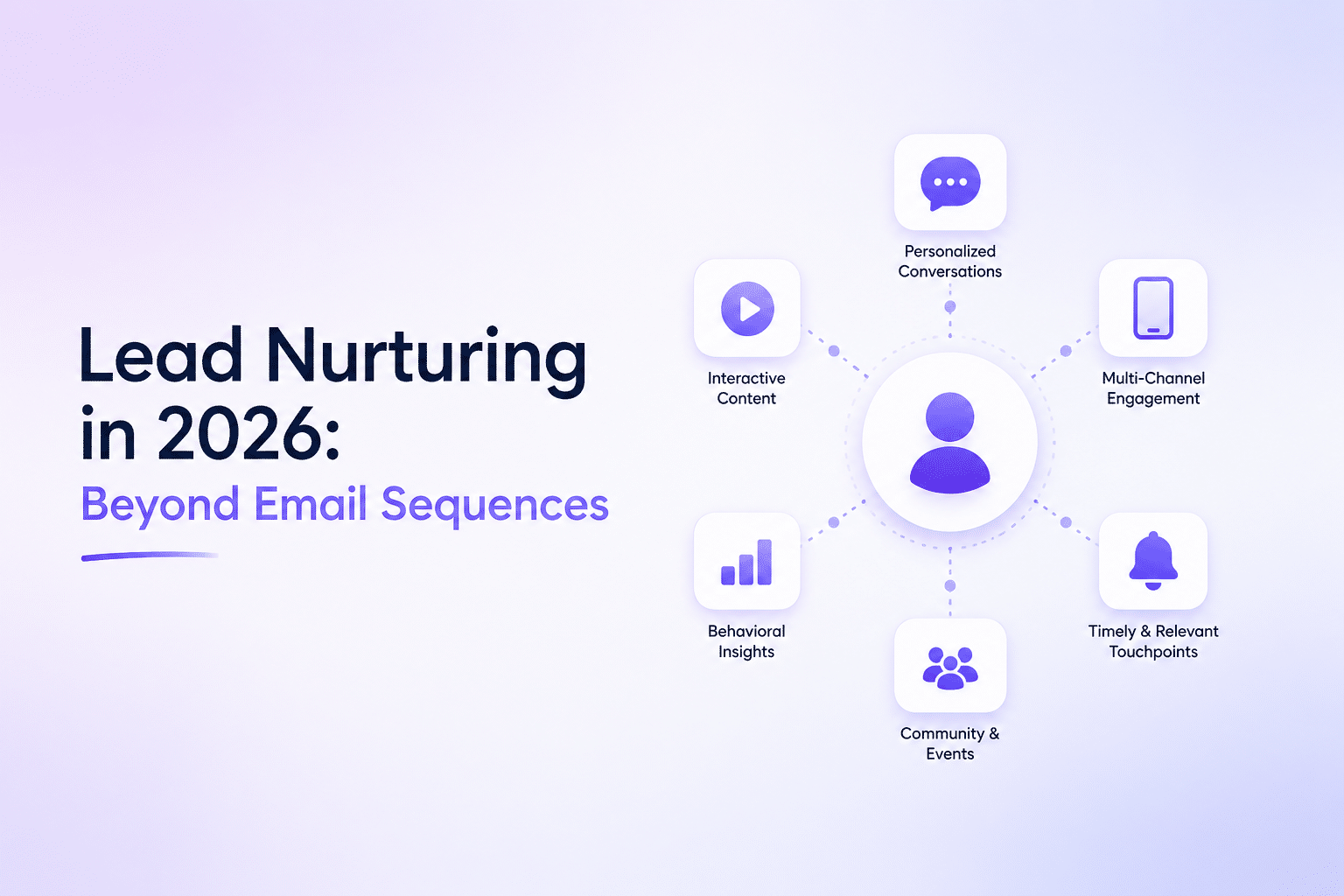

Lead nurturing in 2026 is no longer limited to automated email drip campaigns. While email still plays a role in B2B marketing, modern buyers expect personalized, timely, and multi-channel experiences. Today’s decision-makers conduct independent research, compare competitors, and interact with brands across various platforms before ever speaking to sales. As a result, businesses must adopt a more intelligent, behavior-driven, and value-focused nurturing approach that goes far beyond scheduled email sequences.
In this new era, lead nurturing is about building meaningful relationships through data, personalization, and consistent engagement across the entire buyer journey.
The Evolution of Lead Nurturing
Traditional lead nurturing relied heavily on linear email workflows. Marketers would create a fixed sequence of emails designed to educate prospects and gradually move them toward a sales conversation. While this method worked in the past, it assumed that every prospect followed the same journey.
In 2026, that assumption no longer holds true. Buyers interact with brands across websites, social media, webinars, communities, podcasts, and even AI-powered chat platforms. Each interaction provides valuable behavioral data. Modern nurturing strategies now adapt dynamically based on how prospects engage, what content they consume, and where they are in the buying cycle.
Lead nurturing has evolved into a continuous, omnichannel engagement strategy powered by automation, AI insights, and predictive analytics.
Why Email-Only Nurturing Is No Longer Enough
Email inboxes are crowded, and open rates alone do not reflect true engagement. Prospects may read emails but remain unconvinced. Others may ignore emails while actively researching your solution elsewhere.
Relying solely on email creates gaps in communication. In contrast, a broader nurturing strategy ensures your brand remains visible and relevant across multiple touchpoints. Modern buyers expect seamless experiences, not isolated messages.
An effective 2026 nurturing approach includes:
- Behavioral-triggered messaging
- Personalized website experiences
- Retargeting ads
- Social engagement and thought leadership
- Conversational marketing through chatbots
- Interactive content such as assessments or calculators
By integrating these channels, businesses create a cohesive journey rather than a one-dimensional communication flow.
Hyper-Personalization Through AI and Data
One of the most transformative shifts in lead nurturing is the rise of hyper-personalization. In 2026, generic messaging is ineffective. Buyers expect content tailored to their industry, role, pain points, and stage in the decision-making process.
AI-driven tools analyze user behavior, firmographic data, and engagement patterns to deliver customized experiences. Instead of sending the same follow-up email to all leads, companies now:
- Display dynamic website content based on visitor profile
- Recommend specific case studies aligned with industry
- Trigger content based on content consumption patterns
- Personalize messaging based on buying intent signals
This approach increases relevance, builds trust, and significantly improves conversion rates.
Omnichannel Engagement Strategy
Modern lead nurturing is about meeting prospects where they are. A B2B buyer may first discover your brand on LinkedIn, download a whitepaper from your website, attend a webinar, and later interact with a chatbot before booking a demo. Each of these interactions should feel connected.
An omnichannel nurturing framework typically includes:
- Email campaigns for structured communication
- LinkedIn retargeting ads to reinforce messaging
- Webinar invitations for deeper engagement
- Personalized landing pages
- Sales outreach aligned with marketing behavior data
- Community engagement (Slack groups, industry forums)
The goal is to create a unified experience across all channels rather than treating each channel separately.
Behavioral and Intent-Based Triggers
In 2026, timing is everything. Instead of sending messages based on a calendar schedule, leading companies use behavioral triggers. If a prospect revisits pricing pages, downloads comparison guides, or spends significant time on product features, automated systems alert sales teams or trigger high-intent content.
Intent-based nurturing allows marketers to prioritize high-value leads. It ensures resources are directed toward prospects who are most likely to convert, shortening the sales cycle and improving ROI.
Interactive and Value-Driven Content
Static content alone no longer captures attention. Buyers want engagement and immediate value. Interactive content plays a significant role in nurturing modern leads.
Examples include:
- ROI calculators
- Self-assessment tools
- Product recommendation quizzes
- Live product demos
- Interactive case studies
These tools not only educate prospects but also collect valuable data that further refines personalization strategies.
Sales and Marketing Alignment
Lead nurturing in 2026 requires tight collaboration between marketing and sales teams. Marketing generates engagement signals and behavioral insights, while sales uses that intelligence to personalize outreach.
Shared dashboards, CRM integration, and real-time alerts ensure that sales representatives approach prospects with context. Instead of cold outreach, conversations become informed and consultative.
This alignment transforms nurturing from a marketing-only responsibility into a revenue-focused strategy.
Community-Led Nurturing
An emerging trend in B2B lead nurturing is community-driven engagement. Buyers trust peer discussions more than promotional content. Companies are building private communities, hosting expert panels, and encouraging user-generated discussions to keep prospects engaged.
Community-led nurturing builds credibility and long-term relationships, even if prospects are not immediately ready to purchase. It shifts the focus from pushing sales to fostering belonging and shared knowledge.
Measuring Modern Lead Nurturing Success
Traditional metrics such as email open rates are no longer sufficient. Modern nurturing success is measured through deeper engagement indicators and revenue impact.
Key metrics include:
- Engagement score across channels
- Time to conversion
- Pipeline contribution
- Content interaction depth
- Customer acquisition cost (CAC) reduction
- Revenue influenced by marketing
Data-driven measurement ensures nurturing efforts align directly with business growth goals.
Conclusion
Lead nurturing in 2026 is dynamic, intelligent, and multi-dimensional. Moving beyond basic email sequences, businesses now leverage AI, behavioral triggers, omnichannel strategies, and interactive content to build meaningful relationships with prospects.
Success lies in delivering the right message, to the right person, at the right time — across the right channels. Companies that embrace personalized, value-driven, and data-informed nurturing strategies will not only generate more leads but also convert them faster and more efficiently.
In today’s competitive B2B landscape, effective lead nurturing is no longer optional. It is a strategic necessity for sustainable growth and long-term customer relationships.
