


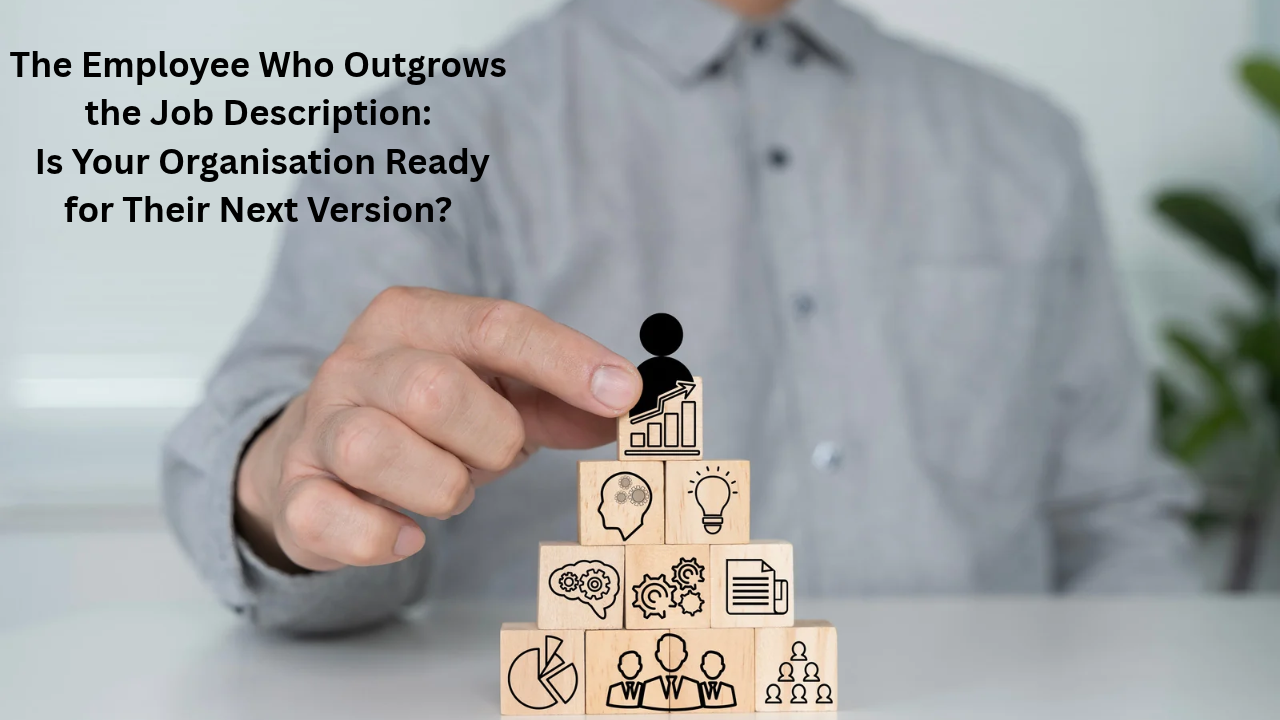

Introduction: Why Employee Development Matters Beyond Job Descriptions
Organisations invest considerable time and resources in defining job roles, establishing responsibilities, setting performance expectations, and identifying the skills required for every position. Job descriptions provide employees with clarity about their responsibilities, expected outcomes, reporting structures, and performance objectives. However, one important aspect of workforce management is often overlooked: employees do not remain professionally unchanged throughout their careers. Their knowledge expands, interests evolve, technical capabilities improve, and new strengths emerge as they gain experience. This is where Employee Development becomes an important consideration for organisations looking to build a skilled, adaptable, and future-ready workforce.
An employee hired to manage routine operational activities may eventually develop expertise in business analytics, process optimisation, project management, or team leadership. Similarly, a marketing executive may become proficient in marketing automation, customer data analysis, and digital strategy. These additional capabilities can create considerable value for businesses. Yet, despite this professional growth, an employee’s designation, responsibilities, and career progression may remain unchanged. This creates a disconnect between what employees are capable of contributing and what organisations formally allow them to accomplish.
The traditional approach to workforce management often focuses on what employees were hired to do rather than what they have the potential to become. As a result, organisations may unintentionally limit professional growth by continuing to evaluate employees against outdated job responsibilities. Businesses must therefore reconsider how they identify talent, recognise emerging capabilities, and create opportunities for individuals to contribute beyond their original positions.
1. Understanding Why Employees Outgrow Their Job Descriptions
Traditional workforce planning is generally based on immediate business requirements. When an organisation identifies a vacancy, its HR department prepares a job description outlining the qualifications, experience, technical knowledge, and responsibilities required for that position. Recruitment teams then identify candidates who match these expectations, while managers evaluate their performance against predetermined objectives.
Although this approach provides structure and accountability, it often assumes that an employee’s capabilities will remain closely aligned with the original requirements of the role. In reality, professional growth rarely follows such a predictable pattern. Employees learn through practical experience, professional training, collaboration, exposure to new technologies, and participation in different business initiatives.
For example, an employee working in customer support may develop strong analytical abilities by regularly examining customer complaints and identifying recurring service issues. Over time, this individual may become capable of contributing to customer experience strategy, operational improvement, or business intelligence projects. Similarly, an administrative professional may acquire advanced technical skills that allow them to support automation initiatives.
Effective Employee Development requires organisations to recognise these changes rather than limiting individuals to the responsibilities outlined when they joined. Managers must understand that job descriptions should provide direction, not create permanent boundaries around professional potential.
2. How Changing Business Requirements Are Redefining Employee Skills
The modern workplace is evolving rapidly due to digital transformation, artificial intelligence, automation, cloud technologies, and changing customer expectations. These developments are changing not only how organisations operate but also the skills employees need to remain effective and competitive.
According to the World Economic Forum’s Future of Jobs Report 2025, technological literacy, AI and big data, analytical thinking, creative thinking, and adaptability are among the important skills shaping the future of work. This highlights why businesses need to continuously evaluate their workforce capabilities and prepare employees for emerging responsibilities.
For instance, a marketing professional who was initially responsible for campaign execution may gradually develop expertise in customer segmentation, marketing automation, performance analytics, and AI-powered campaign optimisation. These capabilities allow the employee to contribute to strategic planning and business decision-making rather than focusing exclusively on routine marketing activities.
Similarly, an HR executive may develop knowledge of HR analytics, employee experience platforms, talent management systems, and workforce planning technologies. These skills can enable them to contribute to organisational strategy, recruitment planning, and data-driven HR decisions.
Employee Development should therefore become a continuous organisational priority rather than an activity introduced only when employees require training for their existing responsibilities. Businesses that regularly assess changing skill requirements can identify opportunities to prepare their workforce for future business challenges.
3. The Hidden Impact of Underutilising Employee Potential
When employees continuously develop new skills without receiving opportunities to apply them, the consequences can extend beyond individual career dissatisfaction. Underutilising employee capabilities can gradually affect workplace motivation, employee engagement, productivity, and long-term retention.
People generally want to feel that their contributions matter and that their professional development creates meaningful opportunities. Consider an employee who consistently exceeds performance expectations, learns new technologies, volunteers for additional responsibilities, and demonstrates the ability to manage complex assignments. If the organisation continues assigning the same routine responsibilities without acknowledging these developments, the employee may begin questioning whether there is sufficient room for career growth.
Initially, this may not result in an immediate decline in performance. Employees may continue meeting deadlines, completing assigned tasks, and maintaining professional standards. However, their willingness to participate in additional initiatives may gradually decrease. They may become less interested in suggesting improvements, mentoring colleagues, or volunteering for cross-functional projects.
This situation can eventually lead to professional disengagement. Employees remain productive but stop contributing beyond their immediate responsibilities because they no longer see a connection between their personal growth and organisational opportunities.
This is also a significant employee retention concern. When individuals believe their skills and ambitions are better aligned with opportunities elsewhere, they may begin exploring external career options. Organisations then lose experienced professionals, institutional knowledge, and valuable internal expertise.
A structured Employee Development strategy can help address this challenge by connecting individual career aspirations with meaningful responsibilities, learning opportunities, and internal career pathways.
4. Why Traditional Performance Management Is No Longer Enough
Performance management systems are designed to evaluate employee contributions, measure progress against business objectives, and identify areas for improvement. However, many traditional performance appraisal processes remain focused on historical achievements, completed assignments, productivity metrics, and performance against predetermined targets.
Although these measurements are essential, they do not always provide a complete understanding of an employee’s future capabilities. An individual may consistently meet current performance expectations while simultaneously developing skills that could support an expanded or completely different role.
Organisations need to introduce more forward-looking performance management practices that consider both current performance and future potential. Regular career development discussions can help bridge this gap.
Managers should ask employees about the skills they have acquired recently, the professional challenges they would like to explore, and the areas in which they believe they could contribute more effectively. These conversations can reveal interests and capabilities that may not be visible through conventional performance assessments.
Importantly, career progression should not always be associated with a promotion or a change in designation. Some employees may prefer to specialise in a particular technical area, while others may be interested in project leadership, mentoring, strategic assignments, or cross-functional collaboration.
By incorporating Employee Development objectives into performance management discussions, businesses can create more meaningful career pathways and ensure that professional growth remains connected to organisational requirements.
5. The Role of Managers in Recognising Emerging Employee Capabilities
Managers are among the most important contributors to identifying employees who have outgrown their original job descriptions. Their regular interactions with team members provide opportunities to observe changes in working styles, problem-solving abilities, technical knowledge, communication skills, and leadership potential.
However, identifying these developments requires managers to look beyond immediate task completion and evaluate the broader contributions employees can make.
For example, an employee who regularly identifies inefficiencies in existing processes may have the potential to contribute to operational excellence initiatives. Someone who frequently helps colleagues resolve technical challenges may demonstrate an aptitude for mentoring or technical leadership. Similarly, an employee who understands customer requirements exceptionally well may be capable of contributing to product improvement or customer experience projects.
Managers should actively encourage employees to communicate their professional interests and development goals. They should also create an environment in which individuals feel comfortable discussing career aspirations without assuming that expressing an interest in another responsibility reflects dissatisfaction with their current role.
One effective approach is to incorporate career development discussions into regular one-to-one meetings rather than limiting them to annual performance reviews. Managers can recommend relevant learning opportunities, assign challenging projects, and provide constructive feedback.
A supportive management culture makes Employee Development a shared responsibility between employees, managers, and HR teams rather than an activity managed exclusively by the HR department.
6. Building a Skills-Based Workforce Through Internal Mobility
One of the most effective ways to utilise developing employee capabilities is through internal mobility. Traditionally, organisations often look outside their existing workforce whenever a new position or business requirement emerges. While external recruitment remains important for acquiring specialised expertise, businesses may overlook employees who already possess relevant knowledge or have the potential to develop the required capabilities.
A skills-based workforce strategy shifts attention from job titles to the actual competencies available within an organisation. Instead of asking only whether an employee fits an existing position, HR teams and business leaders can examine what skills the individual possesses, how those skills could support other departments, and what additional training may be required.
Internal mobility can take several forms, including lateral role changes, temporary project assignments, cross-functional opportunities, internal job rotations, and specialist career pathways.
For example, an employee working in operations with strong analytical skills may be given an opportunity to support a business intelligence project. An HR professional with an interest in technology may participate in implementing a new HR management system. These opportunities allow employees to explore new responsibilities while enabling organisations to utilise existing talent more effectively.
This approach can reduce recruitment expenses, shorten onboarding time, preserve organisational knowledge, and improve employee retention. It also demonstrates that professional growth does not always require employees to leave their current organisations.
Businesses looking to improve this approach can also explore our guide on Workforce Planning Best Practices to understand how internal talent capabilities can support long-term organisational requirements.
7. How HR Technology and Artificial Intelligence Can Support Employee Development
Technology is creating new opportunities for organisations to identify, assess, and utilise employee capabilities. AI-powered HR platforms, talent management systems, and skills-mapping solutions can help businesses build a more comprehensive understanding of their workforce.
These tools can analyse employee profiles, training records, certifications, project experience, and skill assessments to identify capabilities that may not be reflected in formal job descriptions.
For example, a skills intelligence platform may identify employees who have developed expertise in data analysis, automation, or project management despite working in roles that do not formally require these competencies. HR teams can use this information to identify potential candidates for internal projects, future vacancies, leadership development programmes, and specialised training initiatives.
Artificial intelligence can also help organisations identify emerging skill gaps by comparing existing workforce capabilities with future business requirements. This supports more informed decisions regarding employee reskilling, upskilling, succession planning, and recruitment strategies.
However, technology should support rather than replace human judgement. An employee’s professional interests, career ambitions, confidence, willingness to take on new responsibilities, and personal development goals cannot always be accurately understood through automated skill assessments.
HR professionals and managers must combine workforce analytics with meaningful employee conversations to ensure that talent decisions are fair, relevant, and aligned with individual aspirations.
8. Creating a Culture That Encourages Continuous Learning and Career Growth
Recognising employees who outgrow their job descriptions requires more than introducing new HR systems or updating performance management processes. Organisations must build a workplace culture in which continuous learning, professional development, and internal career opportunities are encouraged and supported.
Employees should have access to relevant training programmes, professional certifications, mentoring opportunities, knowledge-sharing sessions, and practical learning experiences. However, learning initiatives should be connected to real business opportunities. Training employees in new skills without providing opportunities to apply those skills may create the same disconnect that organisations are trying to resolve.
For instance, if an employee completes training in data analytics, the organisation should consider involving them in reporting, forecasting, or business intelligence assignments where their newly acquired knowledge can be applied. Similarly, employees who develop leadership capabilities should receive opportunities to coordinate projects, guide junior colleagues, or participate in decision-making activities.
Organisations should also encourage managers to recognise contributions that extend beyond formal job responsibilities. This does not mean continuously increasing employee workloads or assigning additional responsibilities without appropriate recognition. Instead, it involves creating structured opportunities that acknowledge employee capabilities and provide meaningful professional challenges.
Businesses can strengthen these initiatives through dedicated Employee Engagement Strategies that connect workplace motivation, recognition, and career growth.
The LinkedIn Workplace Learning Report 2025 also highlights the importance of career development, continuous learning, coaching, and internal mobility in helping organisations develop and retain talent.
9. Balancing Business Requirements with Employee Career Aspirations
Although recognising emerging employee capabilities is important, organisations must also ensure that career development initiatives remain aligned with business priorities. Not every newly acquired skill will immediately translate into a new position, and not every employee will be interested in taking on additional responsibilities.
Businesses therefore need a balanced approach that considers employee aspirations alongside operational requirements, available opportunities, and future workforce needs.
HR teams can play a central role by creating structured career development frameworks that connect individual skills with organisational objectives. These frameworks can help identify suitable learning pathways, potential internal opportunities, and the competencies required for future roles.
Managers can then work with employees to establish realistic development goals and agree on practical steps for achieving them. If an employee expresses interest in a different career direction but no immediate opportunity exists, managers should communicate this clearly and discuss alternative ways to develop relevant experience.
This may involve temporary assignments, mentoring, training, or participation in specific business projects.
Such an approach helps manage expectations while maintaining employee trust. It also ensures that Employee Development becomes a structured organisational responsibility rather than an informal process that depends entirely on individual managers.
10. Rethinking the Future of Job Descriptions and Workforce Planning
Job descriptions will continue to play an important role in defining responsibilities, establishing accountability, and supporting recruitment. However, organisations should avoid treating them as permanent boundaries around employee capabilities.
As business requirements change and employees develop new competencies, job descriptions and role expectations should evolve accordingly. A more flexible approach to workforce planning involves regularly reviewing job responsibilities, identifying changing skill requirements, and understanding how employee capabilities align with future organisational needs.
For example, an employee may begin their career in a narrowly defined operational role but gradually develop expertise in automation, reporting, and process improvement. Rather than continuing to evaluate the individual exclusively against the original job description, the organisation can consider how these capabilities might support a broader operational excellence role.
This does not mean every employee needs a new designation whenever they acquire additional skills. Instead, it means organisations should remain open to evolving responsibilities, new career pathways, and opportunities to create value in different areas of the business.
A future-ready workforce requires businesses to move beyond traditional role-based thinking and adopt a more adaptable approach to talent management. Employee Development should therefore remain connected to organisational strategy, future skill requirements, and long-term workforce planning.
Conclusion: Recognise What Employees Can Become, Not Just What They Were Hired to Do
An employee’s original job description represents the responsibilities they were expected to fulfil when they joined an organisation. It should not become a permanent definition of their professional capabilities or future potential. As employees gain experience, acquire new skills, and develop different interests, their ability to contribute to the organisation can expand significantly.
Businesses that fail to recognise this growth risk underutilising internal talent, weakening employee engagement, and losing valuable professionals to organisations that offer better career development opportunities.
For HR leaders, managers, and business decision-makers, the priority should be to create a more dynamic approach to talent management, workforce planning, and Employee Development. This means introducing continuous career conversations, encouraging internal mobility, investing in upskilling and reskilling, adopting skills-based workforce strategies, and using HR technology to identify emerging capabilities.
It also requires managers to recognise that employee growth is not always reflected through promotions or changes in job titles. Sometimes, the most valuable development happens when an individual gains the ability to solve more complex problems, contribute to different business functions, or take ownership of responsibilities beyond their original role.
Ultimately, the organisations that succeed in the future will be those that recognise the full potential of their workforce rather than relying exclusively on existing job descriptions. Employees should have opportunities to evolve, and businesses should have systems that allow those evolving capabilities to create meaningful organisational value.
The real question is no longer whether employees will outgrow their job descriptions, but whether organisations are prepared to recognise, support, and benefit from the next version of their people.
