



Introduction: A Battle That’s Constantly Evolving
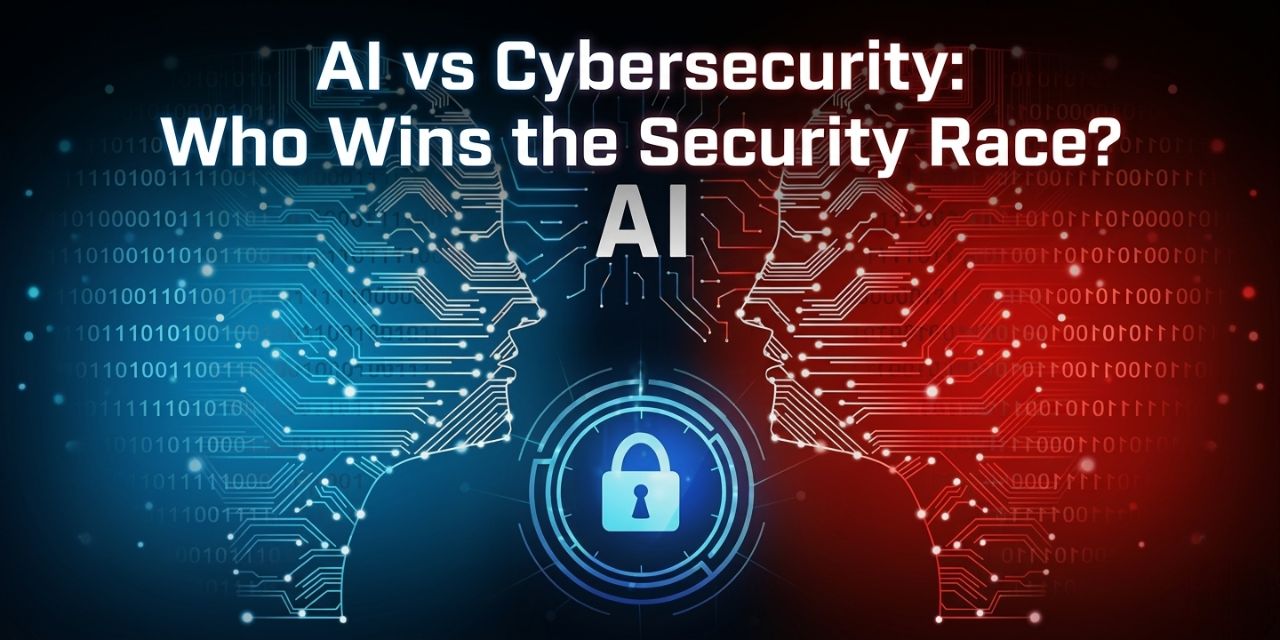
The relationship between artificial intelligence (AI) and cybersecurity has evolved into a dynamic and ongoing arms race. It is no longer just about defending systems against attacks; it is about staying ahead in a constantly shifting landscape where both defenders and attackers are becoming more intelligent and adaptive. Organizations are increasingly relying on AI to strengthen their security posture, while cybercriminals are using the same technology to launch more advanced and deceptive attacks.
This raises an important question—who is actually winning? The reality is far more complex than a simple answer.
The Rise of AI in Cybersecurity
AI has transformed how organizations approach cybersecurity, especially in environments where massive volumes of data make manual monitoring nearly impossible. Modern security systems use machine learning to analyze patterns, detect anomalies, and respond to threats in real time.
Instead of relying solely on predefined rules or known threat signatures, AI enables a proactive approach. It can identify unusual behavior, flag potential risks early, and even automate responses before an incident escalates. This shift allows organizations to move beyond reactive defense and toward predictive security strategies, significantly reducing response times and operational strain on IT teams.
How Cybercriminals Are Using AI
While enterprises are embracing AI to strengthen defenses, cybercriminals are also leveraging it to increase the sophistication of their attacks. AI has made it easier for attackers to scale operations, personalize their tactics, and bypass traditional security measures.
For example, phishing emails generated using AI are now more convincing than ever, often indistinguishable from legitimate communication. Similarly, deepfake technology is being used to impersonate executives or trusted individuals, making fraud more effective. Attackers are also using AI to automate vulnerability scanning and develop malware that can adapt based on how it is detected.
This evolution has made cyber threats more dangerous, as they are no longer static but continuously learning and improving.
AI as a Double-Edged Sword
One of the most defining characteristics of AI in cybersecurity is its dual-use nature. It does not inherently favor defenders or attackers; instead, it amplifies the capabilities of both sides.
For organizations, AI improves detection speed, accuracy, and efficiency, enabling faster and more informed responses. For cybercriminals, it enhances the scale, precision, and stealth of attacks. This creates a constantly shifting balance where neither side holds a permanent advantage.
As a result, the effectiveness of AI depends largely on how well it is implemented, managed, and continuously updated.
Where AI Is Strengthening Cybersecurity
AI is already proving to be highly effective in several areas of cybersecurity. One of its biggest strengths lies in real-time threat detection. Unlike traditional systems, which often rely on known patterns, AI can identify previously unseen threats by analyzing deviations in behavior. This makes it particularly useful in detecting zero-day attacks.
Another major advantage is the automation of security operations. Tasks that once required significant human effort—such as analyzing logs or responding to alerts—can now be handled by AI systems. This not only improves efficiency but also allows cybersecurity professionals to focus on more strategic initiatives.
Additionally, AI enables predictive analytics by analyzing historical data to anticipate potential threats. This forward-looking approach helps organizations address vulnerabilities before they are exploited, reducing overall risk.
Where Cybercriminals Are Gaining Ground
Despite the benefits AI brings to cybersecurity, attackers are also finding new ways to gain an edge. One of the most concerning developments is the rise of highly personalized attacks. By analyzing large datasets, attackers can craft messages and strategies that are tailored to specific individuals or organizations, making them more likely to succeed.
Speed is another advantage for cybercriminals. AI-driven automation allows them to execute attacks at a scale and pace that traditional defenses may struggle to handle. In addition, advanced evasion techniques enable malware to adapt and change its behavior, making detection significantly more difficult.
These developments highlight the growing complexity of the cybersecurity landscape and the need for continuous innovation in defense strategies.
The Human Factor: Still the Weakest Link
Even with the most advanced AI systems in place, human error remains one of the biggest vulnerabilities in cybersecurity. Employees can unknowingly fall for sophisticated phishing attacks or make mistakes that expose sensitive data.
This underscores the importance of combining AI with strong human awareness. Regular training, clear security policies, and a culture of vigilance are essential components of an effective cybersecurity strategy. AI can enhance decision-making and provide support, but it cannot fully replace human judgment.
The Future of the AI-Cybersecurity Race
As AI continues to evolve, its role in cybersecurity will only become more significant. Organizations are expected to adopt more advanced frameworks, such as AI-driven Zero Trust models, and integrate AI more deeply into their security ecosystems. At the same time, there will be a growing emphasis on ethical AI use and governance to ensure responsible deployment.
Collaboration will also play a key role in the future. Sharing threat intelligence across organizations and industries can help create a more unified defense against increasingly sophisticated attacks.
Rather than a clear winner emerging, the future of this race will depend on how effectively each side adapts to new challenges and opportunities.
Who Wins the Security Race?
The reality is that there is no permanent winner in the battle between AI and cybersecurity. Both sides are continuously evolving, and the balance of power shifts based on innovation, investment, and execution.
Organizations that embrace AI while maintaining a strong strategic approach will be better positioned to stay ahead. The key lies in combining advanced technology with skilled professionals and a proactive mindset.
Conclusion: Turning the Race Into an Advantage
AI has fundamentally reshaped the cybersecurity landscape, making defenses more intelligent and attacks more sophisticated. Instead of viewing this as a threat, businesses should see it as an opportunity to strengthen their security posture.
Success in this ongoing race depends on continuous improvement, adaptability, and the ability to leverage both technology and human expertise effectively. Organizations that treat cybersecurity as an evolving process rather than a one-time solution will ultimately gain the upper hand in an increasingly complex digital world.
