



Introduction
Search engine optimization has evolved significantly over the years. While keywords, backlinks, and technical optimization remain important, search engines now place greater emphasis on the quality and credibility of the content they rank. As online competition continues to grow, businesses and content creators must demonstrate not only expertise but also trustworthiness to earn higher visibility in search results. This is where E-E-A-T becomes an essential component of a successful SEO strategy.
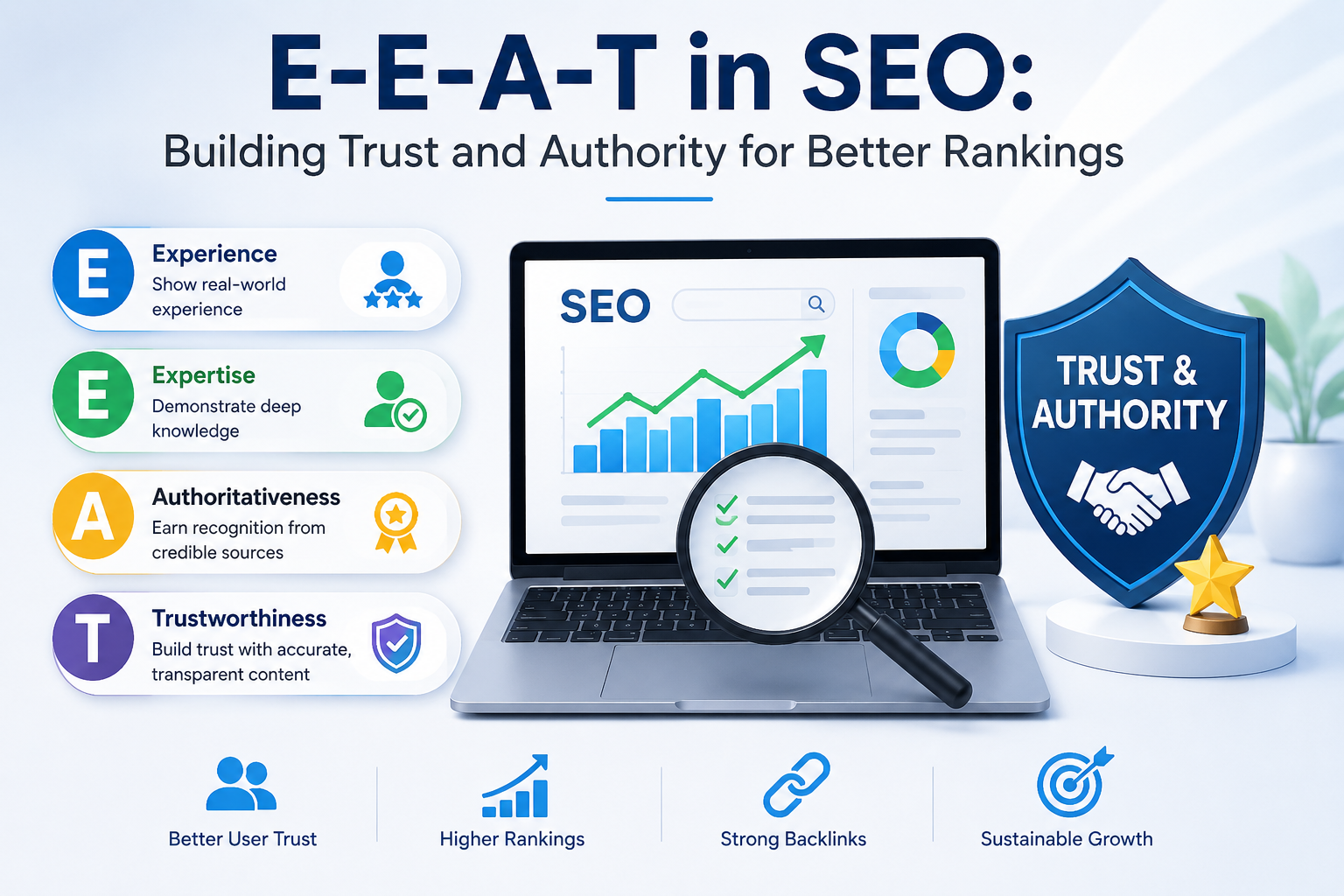
E-E-A-T stands for Experience, Expertise, Authoritativeness, and Trustworthiness. It is a framework used by search engines to evaluate the overall quality and reliability of web content. Although E-E-A-T is not a direct ranking factor, it influences how search engines assess content quality, making it a critical consideration for businesses aiming to improve their online presence and establish long-term credibility.
Understanding the Components of E-E-A-T:
Each element of E-E-A-T contributes to how search engines evaluate content and determine whether it deserves a prominent position in search results. Understanding these components helps organizations create content that meets user expectations while building lasting authority.
- Experience
Experience refers to the firsthand knowledge or practical involvement of the content creator. Readers value insights from individuals or organizations that have directly worked with a product, service, or industry. Sharing real-world examples, case studies, project outcomes, or practical lessons demonstrates authentic experience and helps users trust the information being presented.
For example, a cybersecurity consultant explaining how they mitigated a ransomware attack provides more valuable insights than someone simply summarizing publicly available information. OrLiginal experiences create unique content that search engines recognize as more valuable to users.
- Expertise
Expertise focuses on the depth of knowledge within a specific subject area. Businesses should ensure that their content is created or reviewed by professionals with relevant qualifications and industry experience. Well-researched articles supported by accurate information, statistics, and professional insights establish expertise and increase reader confidence.
Content that thoroughly explains complex topics, answers user questions, and provides actionable recommendations is more likely to be viewed as expert-level content by both readers and search engines.
- Authoritativeness
Authority reflects how well-recognized a website, brand, or author is within a particular industry. Websites that consistently publish valuable content, receive citations from reputable sources, and earn high-quality backlinks gradually establish themselves as trusted authorities.
Building authority requires consistent effort over time. Publishing original research, participating in industry discussions, speaking at conferences, and contributing thought leadership articles all strengthen an organization’s reputation and improve its perceived authority.
- Trustworthiness
Trustworthiness is often considered the most important aspect of E-E-A-T because users need confidence that the information they consume is accurate, secure, and transparent. Websites should clearly identify authors, provide accurate contact information, maintain updated privacy policies, and use secure HTTPS connections.
Trust also extends to factual accuracy. Regularly updating outdated content, citing reliable sources, correcting inaccuracies, and avoiding misleading claims all contribute to building long-term credibility.
Why E-E-A-T Matters for SEO
Modern search engines aim to deliver the most reliable and useful information to users. Websites that consistently demonstrate E-E-A-T are more likely to attract organic traffic, encourage longer user engagement, and earn repeat visitors.
Strong E-E-A-T offers several business benefits:
- Improves user confidence and brand credibility.
- Increases the likelihood of earning quality backlinks.
- Supports higher engagement and lower bounce rates.
- Enhances long-term organic search performance.
- Strengthens brand reputation within the industry.
Rather than focusing solely on ranking algorithms, organizations should prioritize creating genuine value for users. This user-first approach naturally aligns with E-E-A-T principles.
How to Build Experience in Your Content
Demonstrating real experience requires moving beyond generic advice. Readers appreciate authentic stories, practical examples, and lessons learned from actual projects or customer interactions. Including original screenshots, workflow demonstrations, before-and-after results, or customer success stories makes content more unique and trustworthy.
Businesses should also encourage subject matter experts to share their personal perspectives on industry developments. These firsthand insights distinguish content from competitors who rely only on publicly available information.
Strengthening Expertise Through High-Quality Content
Expertise is developed through consistent publication of accurate, informative, and comprehensive content. Every article should answer the user’s search intent while providing meaningful insights that go beyond surface-level explanations.
Businesses can strengthen expertise by:
- Conducting thorough research before publishing.
- Using current industry statistics and verified data.
- Explaining technical concepts in a clear and understandable manner.
- Updating existing articles to reflect industry changes.
- Having content reviewed by experienced professionals.
Maintaining editorial standards ensures that every published piece contributes positively to the website’s overall reputation.
Building Authority Within Your Industry
Authority is earned gradually through consistent contributions to the industry. Publishing original research, whitepapers, surveys, and case studies positions businesses as valuable information sources. Collaborating with respected organizations and earning mentions from reputable websites further reinforces authority.
Guest blogging on credible industry websites, participating in webinars, appearing on podcasts, and engaging in professional communities also increase visibility and strengthen brand recognition. As authority grows, websites naturally attract more backlinks and referral traffic, further improving SEO performance.
Improving Website Trustworthiness
Trust begins with transparency. Visitors should immediately understand who owns the website, who created the content, and how they can contact the organization. Clear author biographies, company information, editorial guidelines, and customer support details contribute to a trustworthy online presence.
Website security is equally important. Implementing HTTPS encryption, maintaining secure payment systems for e-commerce sites, and protecting user data demonstrate a commitment to visitor safety. Regular website maintenance, fixing broken links, and removing outdated information also improve trust and user satisfaction.
Common Mistakes That Weaken E-E-A-T
Many websites unintentionally reduce their credibility by overlooking important quality factors. Avoiding these common mistakes can significantly improve both user trust and search performance.
- Publishing thin or duplicate content.
- Using anonymous authors without credentials.
- Making unsupported or exaggerated claims.
- Ignoring outdated information.
- Prioritizing keyword stuffing over user value.
- Failing to cite reliable references.
- Neglecting website security and transparency.
Addressing these issues helps establish a stronger foundation for sustainable SEO growth.
Measuring the Impact of E-E-A-T
Although E-E-A-T itself cannot be measured through a single metric, businesses can monitor several indicators that reflect improvements in content quality and authority. Increases in organic traffic, higher engagement rates, longer session durations, improved keyword rankings, and growth in quality backlinks often indicate that E-E-A-T efforts are producing positive results.
Regular content audits can also identify opportunities to improve author credibility, update outdated information, strengthen supporting evidence, and enhance the overall user experience.
The Future of E-E-A-T in SEO
As artificial intelligence continues to influence content creation, search engines are becoming even more focused on identifying authentic, experience-driven, and trustworthy information. Simply producing large volumes of AI-generated content will not guarantee strong search visibility. Instead, businesses that combine AI-assisted efficiency with human expertise, original insights, and transparent editorial practices will be better positioned for long-term success.
Future SEO strategies will increasingly emphasize quality over quantity. Organizations that invest in expert contributors, original research, customer-focused content, and trustworthy digital experiences will continue to build stronger search visibility and lasting relationships with their audiences.
Conclusion
E-E-A-T has become one of the most important principles for creating high-quality content that resonates with both users and search engines. By demonstrating genuine experience, showcasing expertise, building industry authority, and maintaining trustworthiness, businesses can create content that stands out in competitive search results. Rather than chasing short-term ranking tactics, organizations should focus on delivering accurate, valuable, and transparent information that addresses user needs. A consistent commitment to E-E-A-T not only improves SEO performance but also strengthens brand reputation, encourages customer loyalty, and supports sustainable long-term digital growth.
