


The Shift Toward a Skills-Driven Workforce
Internal mobility has emerged as a critical workforce strategy as organizations navigate rapid technological change, evolving business models, and shifting employee expectations. Traditional career progression models—largely dependent on job titles and hierarchical promotions—no longer provide the flexibility modern businesses require. Today’s organizations are increasingly adopting skill-based frameworks to unlock workforce potential and create dynamic career pathways. At the center of this transformation lies the concept of skill taxonomies.
Understanding Skill Taxonomies
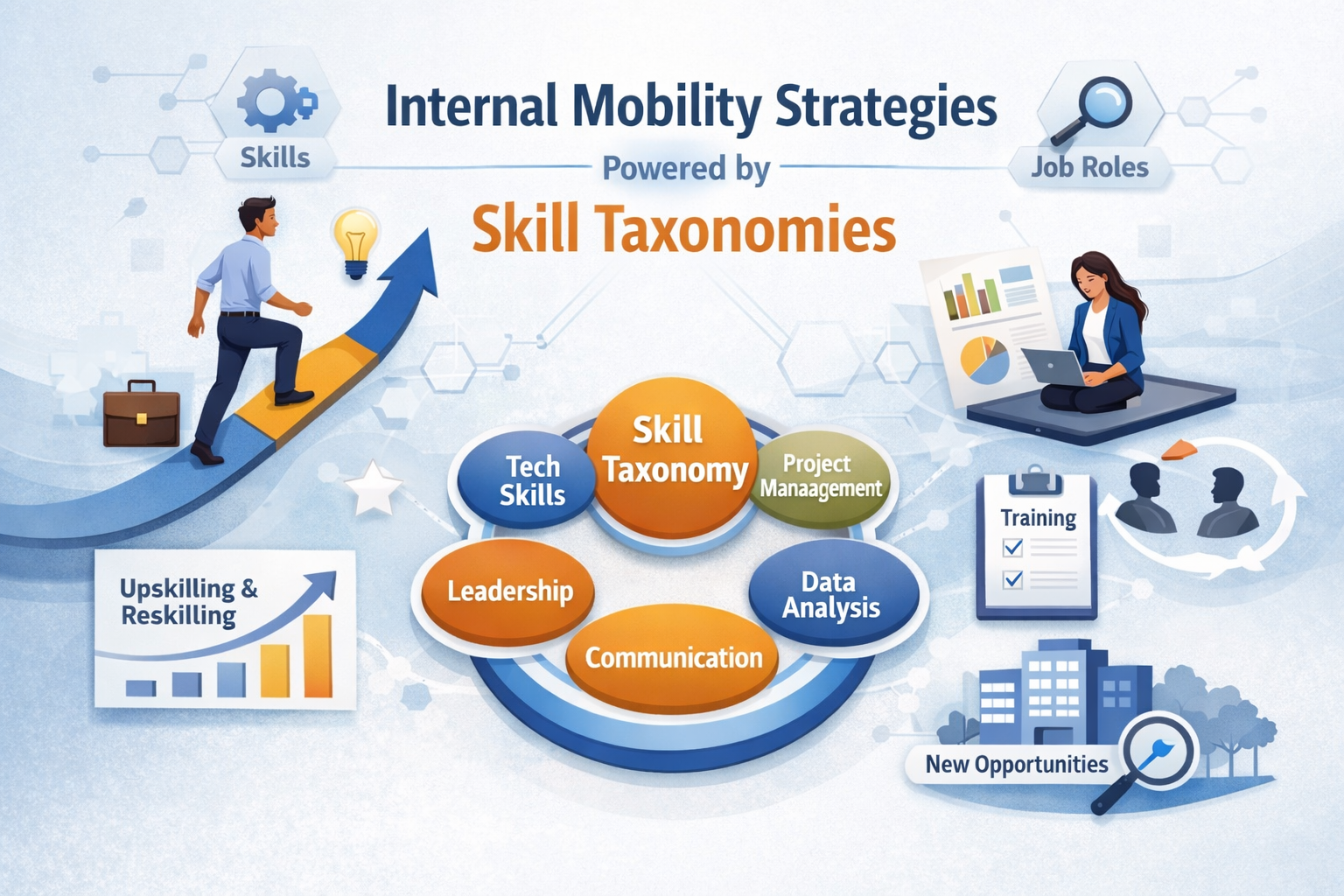
A skill taxonomy is a structured classification system that defines, organizes, and standardizes skills across the organization. Unlike static job descriptions, a skill taxonomy categorizes competencies into clusters, sub-skills, and proficiency levels. This structured framework creates a shared language for capabilities, making it easier to compare roles, identify overlaps, and connect employees to new opportunities based on what they can do rather than what their job title says.
Unlocking Hidden Talent Through Visibility
One of the greatest barriers to effective internal mobility is the lack of visibility into employee capabilities. Many organizations underestimate the depth and diversity of skills within their workforce. By implementing a skill taxonomy and integrating it into HR systems, companies gain clearer insights into existing talent pools. This visibility allows HR leaders to identify candidates for lateral moves, project-based assignments, or leadership pipelines without relying solely on external hiring.
Enabling Transferable and Adjacent Career Moves
Skill taxonomies help organizations map transferable and adjacent skills across departments. For example, competencies in data analysis, stakeholder communication, or project management often apply across multiple business functions. By recognizing these overlaps, companies can design cross-functional career pathways that encourage employees to explore new domains. This approach supports multidirectional growth rather than limiting development to vertical promotions.
Personalizing Learning and Development
A structured skills framework also strengthens learning and development strategies. When employees express interest in new roles, HR teams can use the taxonomy to assess skill gaps and recommend targeted training. Personalized development plans—whether through micro-learning modules, certifications, mentoring, or stretch projects—accelerate readiness for internal transitions. This alignment between learning investments and mobility goals increases both engagement and ROI.
Supporting Workforce Agility and Redeployment
In times of disruption or strategic pivot, organizations with a well-defined skill taxonomy can respond more quickly. Instead of restructuring through layoffs or extensive recruitment, companies can redeploy talent internally based on capability alignment. This agility reduces hiring costs, shortens ramp-up time, and preserves institutional knowledge. Skill-based redeployment also reinforces a culture of adaptability and resilience.
Strengthening Succession Planning
Internal mobility powered by skill taxonomies enhances succession planning by providing data-driven insights into leadership readiness. Rather than selecting successors based solely on tenure or subjective evaluations, organizations can assess competency alignment and development progress. This ensures that critical roles are supported by qualified internal candidates who possess the required skill depth and strategic capabilities.
Integrating Technology and Talent Marketplaces
Modern HR technology platforms and internal talent marketplaces further amplify the impact of skill taxonomies. When embedded into HRIS, performance management, and learning systems, skill frameworks enable automated matching between employee profiles and open opportunities. AI-driven tools can recommend short-term projects, cross-functional gigs, or permanent roles, creating a dynamic internal labor market that continuously connects skills with demand.
Building a Culture That Encourages Mobility
While technology and frameworks are essential, cultural alignment determines long-term success. Leaders must encourage cross-department collaboration and discourage talent hoarding. Transparent communication about career pathways and skill expectations builds trust and motivation among employees. When mobility is positioned as a shared organizational priority, employees feel empowered to pursue growth without fear of negative consequences.
Conclusion
Internal mobility strategies powered by skill taxonomies represent a fundamental shift from role-based to capability-driven talent management. By standardizing skills, increasing workforce visibility, and aligning development initiatives with business priorities, organizations can unlock hidden talent and foster agility. This structured approach not only enhances retention and engagement but also prepares companies to respond confidently to future challenges. In a competitive and rapidly evolving landscape, skill-based internal mobility is no longer optional—it is a strategic imperative for sustainable growth.
