



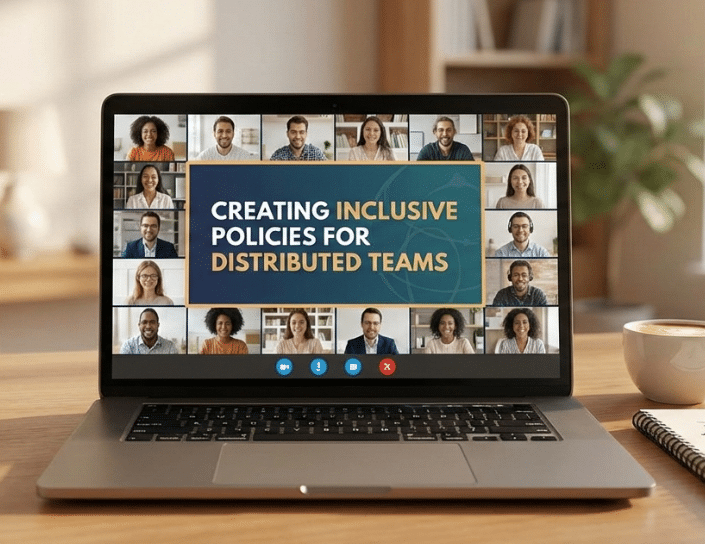
Understanding Inclusion in a Distributed Work Environment
Inclusion in distributed teams goes beyond geographic diversity; it is about ensuring every employee—regardless of location, time zone, culture, or work arrangement—has equal access to opportunities, resources, and decision-making. Unlike traditional offices, distributed workplaces lack informal interactions, which can unintentionally exclude remote or hybrid employees. Inclusive policies must therefore be intentional, clearly documented, and consistently applied. For HR leaders, this means redefining fairness so that flexibility, communication, and participation are built into the organization’s operating model rather than treated as exceptions.
Designing Policies That Support Flexibility Without Bias
Flexibility is often cited as a benefit of distributed teams, but without structured policies, it can lead to favoritism or uneven expectations. Inclusive HR policies should standardize flexible working hours, remote work eligibility, and performance expectations across roles and regions. This ensures employees are evaluated on outcomes rather than visibility or proximity to leadership. Clear guidelines help prevent unconscious bias, especially toward employees working in different time zones or non-traditional schedules, creating a level playing field across the workforce.
Ensuring Equal Access to Information and Communication
Information asymmetry is one of the biggest risks in distributed teams. Employees who are not present in real-time discussions can feel excluded from decisions or strategic updates. Inclusive policies must mandate transparent communication practices, such as documented meeting notes, asynchronous collaboration tools, and centralized knowledge systems. HR can play a key role by defining communication standards that prioritize clarity and accessibility, ensuring that no employee is disadvantaged due to location or working hours.
Building Inclusive Performance Management Systems
Traditional performance management often rewards visibility rather than impact, which disadvantages distributed workers. Inclusive policies should shift the focus to measurable outcomes, clear goals, and regular feedback cycles. By standardizing performance criteria and using objective metrics, organizations can reduce bias and ensure fair evaluations. HR leaders should also train managers to lead distributed teams effectively, emphasizing trust, accountability, and results rather than micromanagement.
Supporting Cultural and Regional Diversity
Distributed teams naturally bring together employees from diverse cultural, linguistic, and social backgrounds. Inclusive policies must recognize and respect these differences rather than enforcing a one-size-fits-all approach. This includes accommodating regional holidays, offering culturally sensitive benefits, and promoting inclusive language in internal communications. By embedding cultural awareness into HR policies, organizations foster a sense of belonging and demonstrate respect for global talent.
Promoting Career Growth and Equal Opportunities
One common concern among remote employees is limited access to career advancement. Inclusive policies should ensure equal opportunities for learning, development, and promotion regardless of location. This can include virtual leadership programs, transparent internal mobility frameworks, and fair access to high-visibility projects. When career progression is clearly defined and location-agnostic, distributed employees feel valued and motivated to contribute long-term.
Prioritizing Well-Being and Psychological Safety
Distributed work can blur boundaries between professional and personal life, increasing the risk of burnout and isolation. Inclusive HR policies should address mental health, workload management, and work-life balance explicitly. This includes setting expectations around availability, encouraging time off, and providing access to well-being resources. Psychological safety—where employees feel comfortable speaking up without fear—must be actively promoted through leadership behavior and HR guidelines.
Measuring and Evolving Inclusion in Distributed Teams
Inclusive policies are not static; they must evolve with workforce needs and business growth. HR teams should regularly assess the effectiveness of distributed work policies through employee surveys, engagement metrics, and feedback loops. Data-driven insights help identify gaps in inclusion and inform continuous improvement. By treating inclusion as an ongoing strategic priority, organizations can build resilient and high-performing distributed teams.
Key Elements of Inclusive Policies for Distributed Teams
- Clear and documented flexible work guidelines
- Outcome-based performance evaluation criteria
- Transparent and asynchronous communication practices
- Equal access to learning, development, and promotions
- Culturally sensitive benefits and policies
- Manager training for leading distributed teams
- Regular measurement of inclusion and engagement
Conclusion
Creating inclusive policies for distributed teams is no longer optional—it is a business imperative in today’s global and flexible work landscape. Inclusive HR policies ensure fairness, reduce bias, and create a sense of belonging for employees regardless of where they work. By focusing on flexibility, transparent communication, equitable performance management, cultural awareness, and continuous improvement, organizations can unlock the full potential of distributed teams. Ultimately, inclusive policies strengthen employee engagement, improve retention, and position businesses for sustainable growth in an increasingly distributed world.
