



Introduction
The digital marketing landscape is undergoing a significant transformation as third-party cookies continue to phase out across major web browsers. For B2B organizations, this shift presents both challenges and opportunities. While marketers have traditionally relied on third-party data to track user behavior, target prospects, and optimize campaigns, growing privacy concerns and stricter regulations have accelerated the move toward first-party data strategies.
First-party data, collected directly from customers and prospects through owned channels, offers a more reliable, compliant, and valuable source of customer intelligence. As businesses adapt to a cookieless future, developing a robust first-party data strategy is no longer optional—it is essential for sustainable growth and competitive advantage.
Understanding First-Party Data
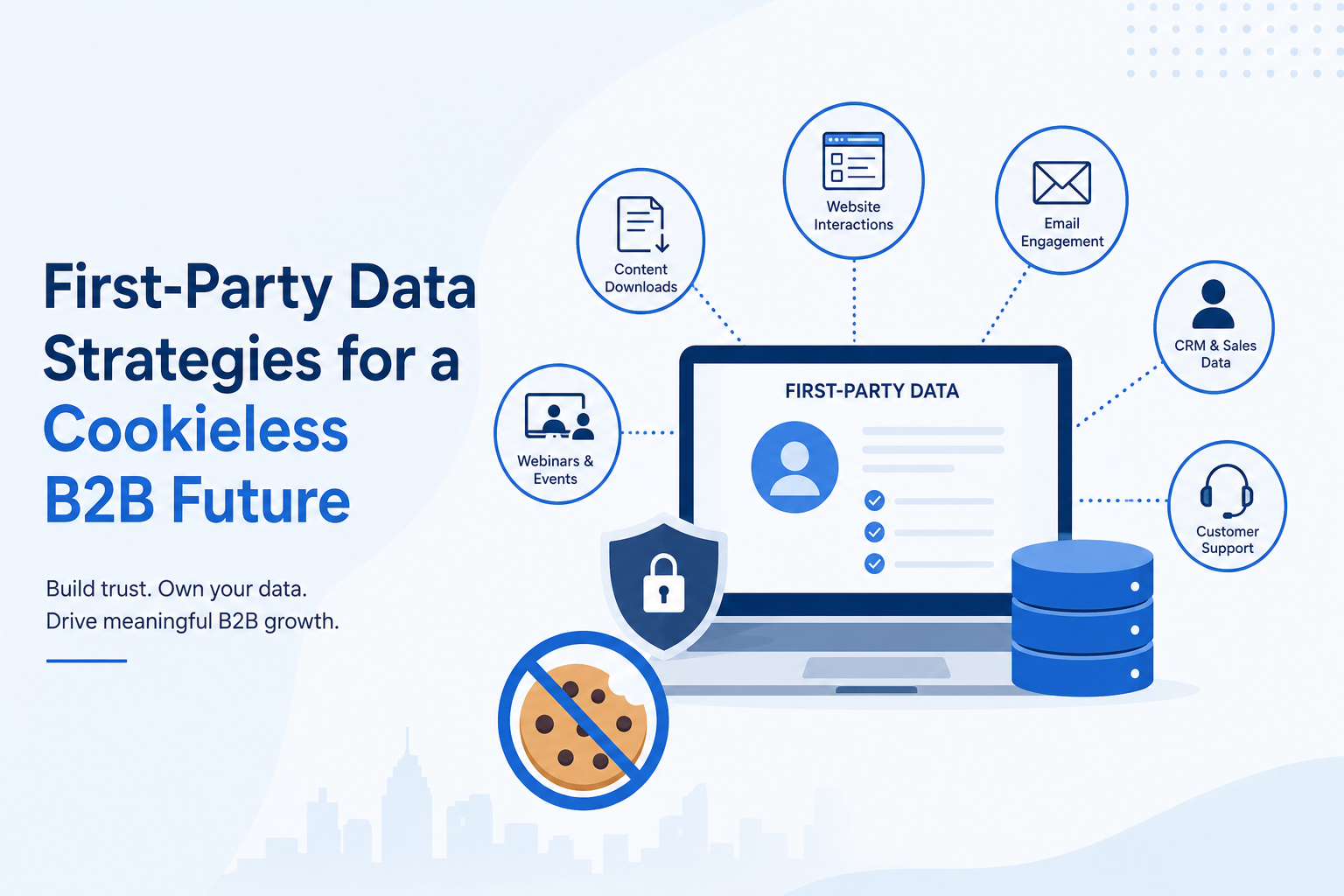
First-party data refers to information that organizations collect directly from their audience through interactions on websites, mobile applications, CRM systems, email campaigns, webinars, surveys, customer support channels, and other owned platforms.
Unlike third-party data, which is obtained from external sources, first-party data is accurate, relevant, and collected with user consent. This direct relationship between businesses and customers creates a foundation for personalized experiences and stronger trust.
Common examples of first-party data include customer contact information, purchase history, website behavior, content engagement, form submissions, and product usage data.
Why First-Party Data Matters in a Cookieless Environment
The decline of third-party cookies is reshaping how B2B marketers identify, engage, and nurture potential customers. Without third-party tracking mechanisms, businesses need alternative methods to understand buyer behavior and deliver personalized experiences.
First-party data offers several advantages:
- Higher data accuracy and reliability
- Improved compliance with privacy regulations
- Better customer insights and segmentation
- Enhanced personalization capabilities
- Stronger customer trust and transparency
- Reduced dependence on external data providers
Organizations that invest in first-party data collection and management today will be better positioned to maintain marketing effectiveness in the future.
Building a Strong First-Party Data Foundation
A successful first-party data strategy begins with creating a comprehensive framework for collecting, organizing, and utilizing customer information. Businesses must evaluate all customer touchpoints and identify opportunities to gather meaningful data through value-driven interactions.
This process involves aligning marketing, sales, customer success, and IT teams to ensure data consistency across the organization. A unified approach helps eliminate data silos and creates a more complete view of the customer journey.
Additionally, organizations should establish clear data governance policies that define how information is collected, stored, accessed, and protected.
Leveraging Content Marketing for Data Collection
Content marketing remains one of the most effective ways to generate first-party data in the B2B space. High-value content encourages prospects to voluntarily share information in exchange for valuable resources.
Organizations can collect meaningful data through:
- Whitepaper downloads
- Industry reports
- E-books and guides
- Webinar registrations
- Interactive assessments
- Newsletter subscriptions
Rather than focusing solely on lead generation, businesses should use content engagement data to understand customer interests, buying intent, and decision-making behaviors.
Enhancing Customer Experiences Through Personalization
First-party data enables organizations to deliver highly personalized experiences across multiple channels. By analyzing customer preferences, behavior patterns, and engagement history, businesses can tailor messaging, content recommendations, and product offerings to individual needs.
Personalization not only improves customer satisfaction but also increases conversion rates and customer loyalty. As privacy expectations continue to rise, customers are more likely to engage with brands that provide relevant experiences while respecting data privacy.
Successful personalization strategies rely on continuous data analysis and real-time customer insights to ensure interactions remain meaningful and timely.
Utilizing Customer Data Platforms (CDPs)
Customer Data Platforms have become essential tools for managing first-party data at scale. A CDP consolidates information from multiple sources into a unified customer profile, enabling organizations to gain a comprehensive understanding of their audience.
By centralizing customer data, businesses can improve segmentation, audience targeting, and campaign performance. CDPs also help organizations activate data across marketing, sales, and customer service channels, creating a consistent and connected customer experience.
As B2B buying journeys become increasingly complex, unified customer profiles provide the visibility needed to engage prospects effectively at every stage.
Strengthening Data Privacy and Compliance
Trust has become a critical competitive differentiator in the digital economy. Customers expect organizations to handle their personal information responsibly and transparently.
Businesses should prioritize:
- Transparent consent management
- Clear privacy policies
- Secure data storage practices
- Regular compliance audits
- User preference management systems
By demonstrating a commitment to data privacy, organizations can strengthen customer relationships while reducing regulatory risks.
Integrating First-Party Data Across Sales and Marketing
One of the greatest advantages of first-party data is its ability to align sales and marketing efforts. Shared customer insights allow teams to identify high-intent prospects, personalize outreach, and improve lead nurturing strategies.
When sales representatives have access to accurate behavioral and engagement data, they can engage prospects with greater relevance and context. This improves conversion rates while creating a more seamless buyer experience.
Organizations that integrate first-party data across departments often achieve higher efficiency, stronger collaboration, and more predictable revenue growth.
Measuring Success and Continuous Optimization
A first-party data strategy should be continuously monitored and refined. Organizations must establish key performance indicators (KPIs) to evaluate data quality, customer engagement, campaign effectiveness, and revenue impact.
Important metrics may include customer acquisition costs, lead conversion rates, customer lifetime value, engagement levels, and retention rates.
Regular analysis helps businesses identify opportunities for improvement and ensures that data-driven initiatives continue to deliver measurable business outcomes.
Conclusion
As the digital ecosystem transitions toward a cookieless future, first-party data is emerging as the foundation of successful B2B marketing strategies. Organizations that proactively invest in collecting, managing, and activating first-party data will gain deeper customer insights, improve personalization, strengthen compliance, and build long-term customer trust.
Rather than viewing the end of third-party cookies as a limitation, forward-thinking businesses should embrace it as an opportunity to create more meaningful customer relationships. By implementing robust first-party data strategies today, B2B organizations can position themselves for sustainable growth, enhanced customer experiences, and long-term success in an increasingly privacy-focused marketplace.
