



Introduction
B2B sales has undergone a major transformation over the past few years, and in 2026, traditional approaches are no longer sufficient to win high-value deals. While Account-Based Marketing (ABM) laid the foundation for targeted engagement, organizations are now moving toward a more evolved and integrated approach known as Account-Based Selling (ABS). This shift represents a deeper alignment between sales and marketing, where the focus is not just on generating leads but on driving meaningful engagement with specific high-value accounts throughout the entire sales cycle.
ABS goes beyond marketing-led targeting and places sales teams at the center of strategic account engagement. It emphasizes personalization, timing, and data-driven decision-making to build stronger relationships and accelerate deal closures.
What is Account-Based Selling (ABS)?
Account-Based Selling is a strategic sales approach where sales teams identify, prioritize, and engage high-value accounts with tailored messaging and personalized outreach. Unlike traditional sales models that rely on volume-based lead generation, ABS focuses on quality over quantity.
In ABS, sales professionals collaborate closely with marketing, customer success, and even product teams to create a unified experience for target accounts. The goal is to treat each account as a “market of one,” ensuring that every interaction is relevant and valuable.
Why ABS is Replacing Traditional ABM
While ABM primarily focused on marketing activities such as targeted campaigns and content personalization, it often lacked deep sales involvement. ABS fills this gap by bringing sales teams into the strategic planning process from the beginning.
In 2026, buyers are more informed and independent than ever. They expect personalized interactions, quick responses, and solutions tailored to their specific business challenges. ABS enables organizations to meet these expectations by combining intent data, behavioral insights, and real-time engagement strategies.
Key reasons for this shift include:
- Buyers prefer personalized and consultative selling experiences
- Sales cycles are longer and involve multiple stakeholders
- Data and AI tools allow deeper account insights
- Revenue teams are now measured on outcomes, not just activities
Core Elements of a Successful ABS Strategy
1. Deep Account Intelligence
ABS relies heavily on data. Sales teams must understand their target accounts in detail, including industry trends, business challenges, decision-makers, and buying signals. This goes beyond basic firmographics and dives into behavioral and intent data.
2. Hyper-Personalized Outreach
Generic outreach no longer works. ABS requires crafting highly personalized messages that resonate with each stakeholder within an account. This includes emails, LinkedIn interactions, and even customized presentations.
3. Sales and Marketing Alignment
One of the biggest strengths of ABS is the alignment between sales and marketing teams. Both functions work toward a common goal—closing high-value accounts—rather than operating in silos.
4. Multi-Threaded Engagement
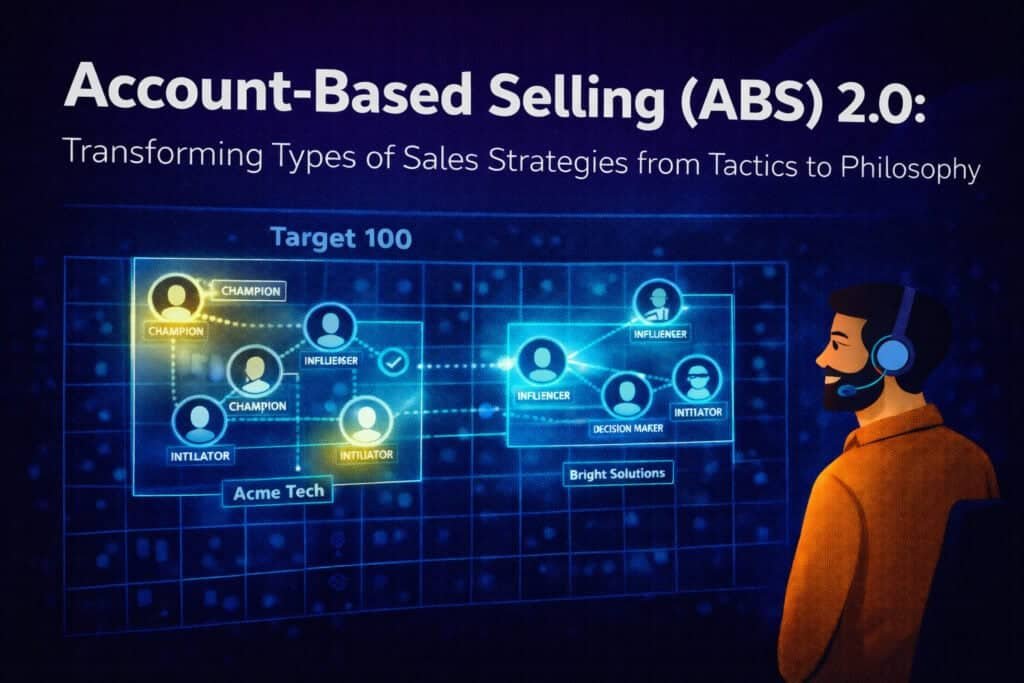
In complex B2B deals, multiple decision-makers are involved. ABS focuses on engaging different stakeholders within the same account simultaneously, ensuring stronger influence and faster decision-making.
Key Benefits of Account-Based Selling
Account-Based Selling offers several advantages that make it a preferred strategy in modern B2B environments. It helps organizations focus their resources on accounts that are most likely to convert, resulting in better ROI and higher efficiency.
Some of the major benefits include:
- Higher conversion rates due to targeted engagement
- Stronger relationships with key decision-makers
- Shorter sales cycles through focused efforts
- Improved deal sizes and revenue growth
- Better alignment across revenue teams
The Role of Technology in ABS
Technology plays a crucial role in enabling ABS strategies. Advanced tools powered by AI and machine learning help sales teams identify high-intent accounts, predict buying behavior, and automate repetitive tasks.
CRM systems, intent data platforms, and sales engagement tools provide actionable insights that allow sales professionals to act at the right time with the right message. These technologies also help track account activity, measure engagement, and optimize strategies continuously.
Challenges in Implementing ABS
Despite its advantages, implementing ABS is not without challenges. Organizations often struggle with data quality, team alignment, and the shift from traditional sales methods.
Common challenges include:
- Lack of clean and unified data
- Resistance to change within sales teams
- Difficulty in identifying the right target accounts
- Misalignment between sales and marketing goals
To overcome these challenges, companies need to invest in training, adopt the right tools, and foster a culture of collaboration across teams.
Future of ABS in 2026 and Beyond
As B2B buying continues to evolve, ABS will become even more sophisticated. The integration of AI, predictive analytics, and real-time personalization will further enhance the effectiveness of this approach.
In the future, ABS will not just be a strategy but a core component of revenue operations. Organizations that successfully implement ABS will be better positioned to build long-term relationships, increase customer lifetime value, and stay ahead in a competitive market.
Conclusion
Account-Based Selling in 2026 represents a significant shift from traditional sales and marketing practices. By going beyond ABM, ABS places a strong emphasis on personalized engagement, data-driven insights, and cross-functional collaboration. It enables organizations to focus on high-value accounts and deliver tailored experiences that resonate with modern buyers.
As the B2B landscape becomes more complex and competitive, adopting ABS is no longer optional—it is essential for sustainable growth. Companies that embrace this approach will not only improve their sales performance but also build stronger, more meaningful relationships with their customers.
