


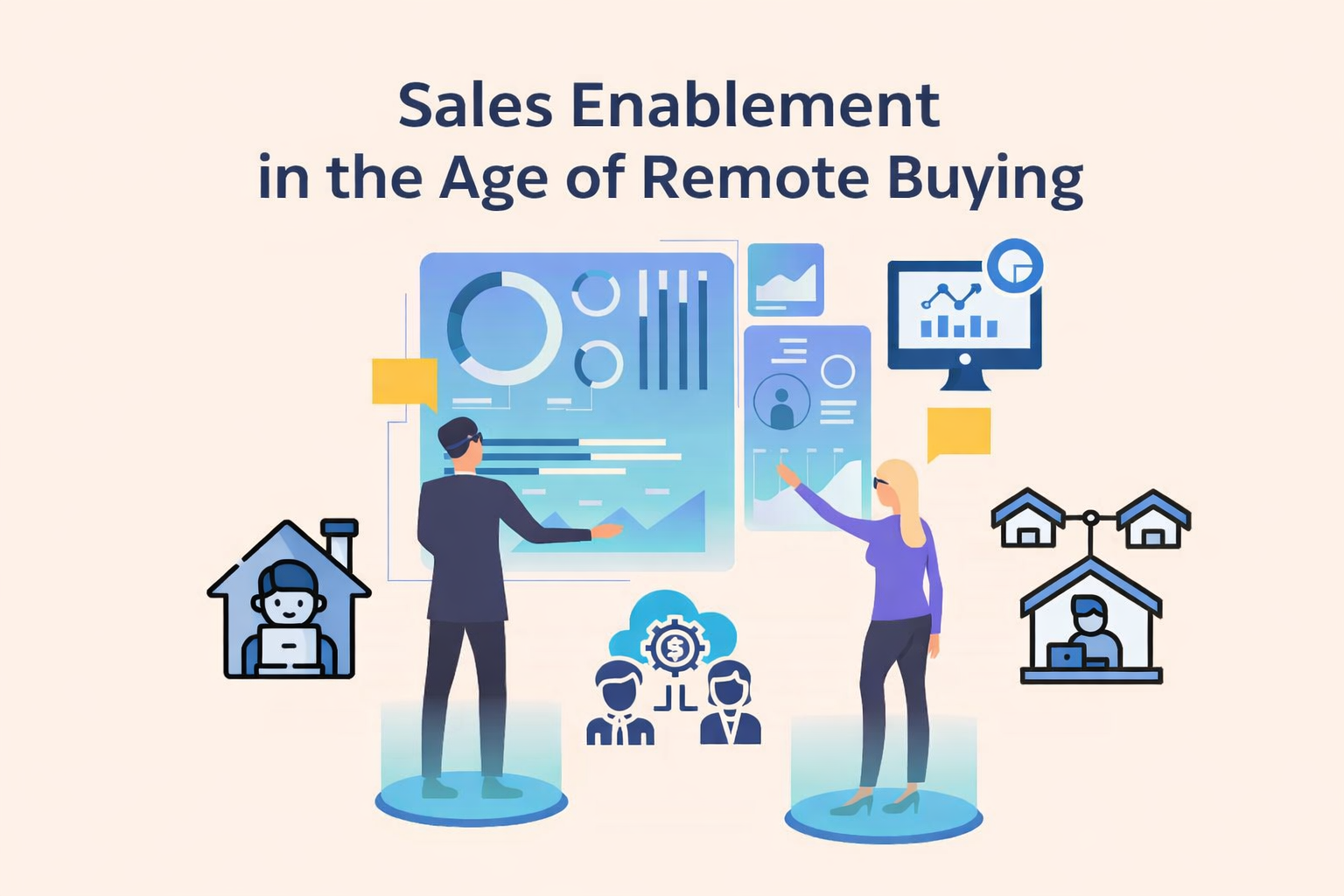

The B2B buying landscape has undergone a permanent transformation. What began as a temporary shift during global disruptions has now evolved into a long-term behavioral change: buyers prefer remote interactions. Decision-makers research independently, compare vendors online, attend virtual demos, and engage sales teams only when they are well into the buying journey. In this environment, sales enablement is no longer just about training and content—it is about equipping revenue teams with the tools, data, and strategies needed to influence digitally empowered buyers.
Sales enablement in the age of remote buying is the strategic alignment of people, processes, technology, and content to help sales teams deliver value across digital touchpoints. It bridges the gap between marketing and sales while ensuring that representatives are prepared for consultative, insight-driven conversations rather than traditional product pitches.
The Rise of the Remote B2B Buyer
Modern B2B buyers are self-directed. Research shows that a significant portion of the buying process happens before a prospect even speaks to a sales representative. Buyers explore websites, download whitepapers, read reviews, compare competitors, and evaluate pricing models independently. Platforms like LinkedIn, peer review sites such as G2, and vendor webinars play a crucial role in shaping perception before direct engagement begins.
This shift creates two major challenges for sales teams:
- Reduced early-stage influence in the buyer journey
- Higher expectations for personalized, value-driven conversations
As a result, sales enablement must adapt to empower reps with data insights, digital communication skills, and contextual content that aligns with where buyers are in their journey.
Redefining Sales Enablement for a Digital-First World
Traditional sales enablement focused heavily on onboarding, pitch decks, and occasional training sessions. In contrast, modern sales enablement is continuous, technology-driven, and performance-focused. It integrates CRM systems, sales intelligence platforms, content management tools, and analytics dashboards to create a connected ecosystem.
Today’s enablement strategy must support:
- Virtual selling capabilities – Running impactful video meetings and remote demos.
- Real-time content access – Delivering tailored materials during live conversations.
- Data-backed engagement – Leveraging buyer intent signals and behavioral insights.
- Cross-functional alignment – Synchronizing marketing, sales, and customer success.
Without this integration, sales teams risk delivering generic pitches that fail to resonate with informed, research-driven buyers.
The Critical Role of Technology
Technology sits at the core of modern sales enablement. CRM platforms like Salesforce and HubSpot help track buyer interactions across channels. Revenue intelligence tools provide insights into deal health, engagement patterns, and pipeline risks.
Meanwhile, video conferencing platforms such as Zoom have become primary sales environments rather than supplementary tools. Reps must now master digital presence, tone modulation, screen-sharing techniques, and structured virtual presentations.
Effective enablement ensures that technology is not just implemented but optimized. This includes:
- Automated follow-ups and scheduling
- AI-driven conversation analysis
- Content tracking to measure engagement
- Integrated proposal and contract workflows
When technology works seamlessly, sales reps can focus on strategic conversations instead of administrative tasks.
Content as a Strategic Asset
In remote buying environments, content often replaces in-person persuasion. Sales enablement must ensure that content is relevant, personalized, and easily accessible. Static PDFs and generic brochures no longer suffice. Instead, high-performing organizations invest in interactive demos, industry-specific case studies, ROI calculators, and personalized microsites.
Content should align with buyer stages:
- Awareness Stage: Educational guides and thought leadership
- Consideration Stage: Case studies, comparison sheets, and solution briefs
- Decision Stage: ROI models, security documentation, implementation plans
Enablement teams must also track content effectiveness. Which assets shorten deal cycles? Which resources increase meeting-to-close ratios? Data-driven refinement ensures content contributes directly to revenue outcomes.
Skills Development for Remote Selling
Remote selling demands a distinct skill set. Sales professionals must excel in virtual communication, active listening, digital storytelling, and concise value articulation. Body language cues are limited, making emotional intelligence even more critical.
Training programs should emphasize:
- Virtual presentation mastery
- Objection handling in digital settings
- Personalized outreach strategies
- Social selling techniques
For example, leveraging thought leadership content and strategic networking on LinkedIn can significantly enhance trust and credibility before formal sales conversations begin.
Continuous coaching and performance analytics further reinforce skill development. Modern enablement platforms often use recorded calls and AI analysis to identify improvement opportunities and replicate winning behaviors.
Aligning Sales and Marketing for Remote Buyers
In remote buying journeys, alignment between marketing and sales becomes non-negotiable. Marketing generates digital touchpoints, while sales converts interest into revenue. Without coordination, messaging becomes fragmented.
Effective alignment includes:
- Shared KPIs and revenue goals
- Clear definitions of marketing-qualified and sales-qualified leads
- Feedback loops to refine messaging
- Joint content planning based on buyer insights
When sales and marketing operate as a unified revenue team, buyers experience consistency across webinars, email campaigns, and live sales conversations.
Measuring Sales Enablement Impact
Enablement must be measurable to justify investment and drive improvement. Key performance indicators often include:
- Sales cycle length
- Win rates
- Average deal size
- Ramp time for new hires
- Content engagement metrics
Rather than focusing solely on activity metrics (calls made, emails sent), organizations are shifting toward outcome-based metrics tied directly to revenue performance.
The Human Element in a Digital Era
Despite technological advancements, remote buying remains fundamentally human. Trust, credibility, and expertise determine purchasing decisions. Sales enablement should not replace human interaction but enhance it.
Reps must position themselves as advisors who provide clarity in complex decision-making environments. Personalization, empathy, and responsiveness differentiate successful sales professionals from competitors who rely solely on automation.
In many ways, remote buying has elevated the importance of relationship-building. Without in-person meetings, every digital interaction carries greater weight.
Conclusion
Sales enablement in the age of remote buying is no longer optional—it is a strategic imperative. As B2B buyers increasingly self-educate and engage digitally, organizations must equip their sales teams with advanced tools, targeted content, data insights, and refined virtual selling skills. Technology enables efficiency, content drives influence, and alignment ensures consistency. However, the true differentiator remains the human ability to deliver value, build trust, and guide informed buyers toward confident decisions.
Companies that treat sales enablement as a continuous, data-driven discipline rather than a one-time initiative will not only adapt to remote buying—they will lead in it.
