



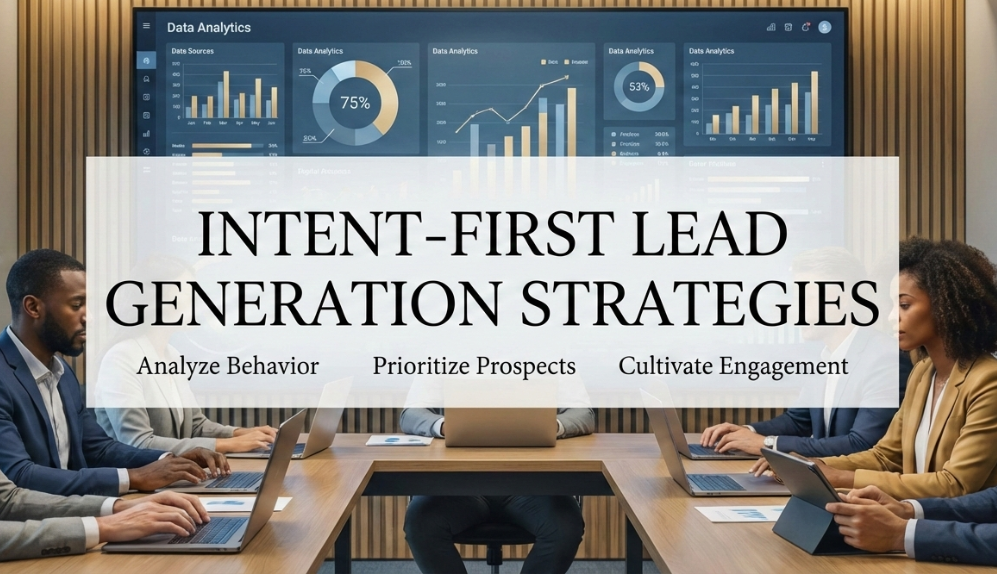
Understanding Intent-First Lead Generation
Intent-first lead generation is a modern B2B strategy that prioritizes buyer behavior and signals over traditional volume-based lead capture. Instead of chasing every form fill or cold prospect, intent-first focuses on identifying companies and decision-makers who are actively researching, comparing, or showing buying signals related to your solution. These signals can come from content consumption, keyword searches, competitor comparisons, review site activity, or engagement across digital channels. By aligning outreach with demonstrated interest, sales and marketing teams engage buyers at the right moment, increasing relevance, trust, and conversion probability.
Why Traditional Lead Generation Is No Longer Enough
Traditional lead generation methods—such as gated content, cold lists, and mass outbound—often produce high lead volume but low sales readiness. Buyers today complete most of their research independently before speaking to a sales rep, making early-stage outreach feel intrusive or irrelevant. Intent-first strategies solve this mismatch by recognizing that timing is as important as targeting. When teams focus on intent data, they avoid wasted effort on disengaged prospects and instead concentrate on accounts that are already moving through their buying journey, resulting in shorter sales cycles and higher deal quality.
Types of Intent Data That Drive Better Leads
Intent-first strategies rely on multiple layers of data to paint a clear picture of buyer readiness. First-party intent includes signals from your own website, emails, webinars, and product interactions. Second-party intent comes from trusted partners and publishers sharing engagement insights. Third-party intent captures off-site behavior such as keyword searches, review site visits, and content consumption across the web. When these data sources are combined and analyzed, they allow teams to identify which accounts are in-market, what problems they are trying to solve, and where they are in the decision process.
Aligning Sales and Marketing Around Intent Signals
Intent-first lead generation only works when sales and marketing operate as a single revenue team. Marketing is responsible for monitoring intent trends, prioritizing accounts, and delivering context-rich insights, while sales uses those insights to tailor conversations. Instead of generic outreach, reps can reference specific challenges, solutions being evaluated, or content topics prospects have shown interest in. This alignment ensures that marketing generates sales-ready opportunities, and sales engages with confidence, relevance, and credibility—dramatically improving response rates.
Personalization at Scale Using Intent Insights
One of the biggest advantages of intent-first strategies is the ability to deliver hyper-personalized messaging at scale. Intent data reveals what a prospect cares about right now, enabling personalized emails, ads, landing pages, and sales conversations that directly address their pain points. Rather than relying on static buyer personas, teams use real-time behavior to adapt messaging dynamically. This approach makes outreach feel helpful rather than promotional and positions your brand as a trusted advisor during the buyer’s research phase.
Integrating Intent Data Into Your Tech Stack
For intent-first lead generation to be effective, intent data must be embedded into your existing sales and marketing systems. When integrated with CRMs, marketing automation platforms, and sales engagement tools, intent signals can trigger alerts, prioritize accounts, and automate next steps. For example, a surge in intent from a target account can prompt immediate sales outreach, personalized nurture campaigns, or targeted advertising. This automation ensures that high-intent prospects are never missed and that follow-up happens at peak buying interest.
Measuring Success in an Intent-First Model
Measuring intent-first lead generation goes beyond tracking raw lead numbers. Success is evaluated using metrics such as pipeline velocity, opportunity conversion rates, deal size, and time to close. Teams also monitor engagement quality—reply rates, meeting acceptance, and content interaction after outreach. Over time, organizations that adopt intent-first strategies typically see fewer leads but higher revenue impact, proving that quality and timing outperform volume-based approaches.
The Future of Intent-First Lead Generation
As B2B buying behavior continues to evolve, intent-first strategies will become the foundation of demand generation. Advances in AI and predictive analytics are making intent signals more accurate, actionable, and real-time. Future sales and marketing teams will rely less on static campaigns and more on adaptive, behavior-driven engagement. Companies that invest early in intent-first lead generation will gain a competitive advantage by meeting buyers exactly where they are—before competitors even know the opportunity exists.
Key Components of an Effective Intent-First Strategy
- Identifying high-value intent signals across multiple data sources
- Prioritizing accounts based on buying readiness, not lead volume
- Aligning sales and marketing around shared intent insights
- Personalizing outreach based on real buyer behavior
- Integrating intent data into CRM and automation workflows
- Measuring success through revenue impact and pipeline quality
Conclusion: Why Intent-First Lead Generation Is a Game Changer
Intent-first lead generation represents a fundamental shift in how B2B companies attract, engage, and convert buyers. Instead of interrupting prospects with generic messages, this approach respects the modern buyer’s journey by responding to real signals of interest and need. By focusing on intent, organizations reduce wasted effort, improve alignment between teams, and create more meaningful buyer experiences.
In an increasingly competitive market, intent-first strategies allow businesses to prioritize relevance over reach and timing over volume. Sales teams become more confident and effective because they engage prospects who are already motivated, while marketing teams prove their impact by driving pipeline and revenue—not just leads. As technology continues to evolve, intent-first lead generation will move from a competitive advantage to a necessity. Companies that embrace it today will be better positioned to build trust, accelerate growth, and win in the future of B2B sales.
