



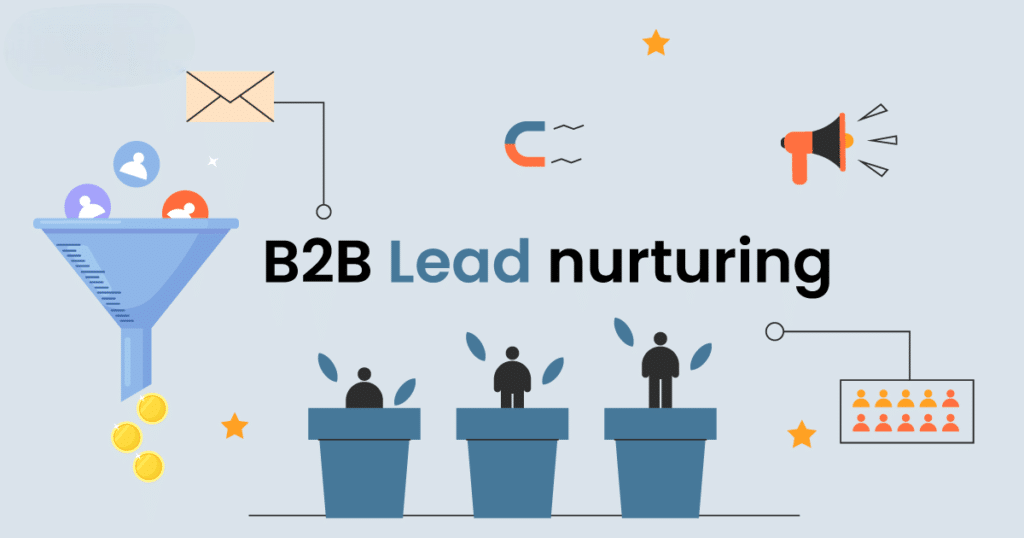
Introduction to Lead Nurturing in B2B Marketing
Lead nurturing is a crucial component of B2B digital marketing that focuses on developing relationships with potential customers throughout their buying journey. In the B2B environment, the purchasing process is often longer and involves multiple decision-makers, which means businesses must continuously engage prospects with relevant information and value. Lead nurturing helps companies guide potential clients from initial awareness to the final purchasing decision by providing the right content at the right time. Instead of focusing solely on acquiring new leads, businesses concentrate on building trust, educating prospects, and maintaining consistent communication.
Importance of Lead Nurturing in the B2B Buying Process
In B2B marketing, most leads are not ready to make a purchase immediately after the first interaction with a brand. They usually conduct extensive research, compare solutions, and evaluate different vendors before making a decision. Lead nurturing allows marketers to stay connected with these prospects by sharing useful content, answering their questions, and demonstrating how their products or services solve specific business problems. By doing so, companies increase the likelihood of converting leads into loyal customers.
Role of Content Marketing in Lead Nurturing
One of the most effective techniques in B2B lead nurturing is content marketing. High-quality content helps businesses educate their prospects and position themselves as industry experts. Through blog posts, whitepapers, case studies, webinars, and eBooks, companies can address the challenges faced by their target audience and offer practical solutions. Educational content is particularly valuable in B2B marketing because decision-makers prefer to work with organizations that demonstrate knowledge and credibility in their field. Consistent content delivery ensures that prospects continue to engage with the brand and move gradually toward making a purchasing decision.
Email Marketing as a Lead Nurturing Tool
Another important technique is email marketing, which remains one of the most powerful tools for nurturing B2B leads. Email campaigns allow companies to communicate directly with potential customers and provide personalized information based on their interests and behavior. For example, if a prospect downloads a whitepaper or registers for a webinar, the company can send follow-up emails with related resources or product demonstrations. Personalized email communication helps businesses maintain engagement while guiding prospects through different stages of the sales funnel.
Marketing Automation in Lead Nurturing
Marketing automation also plays a significant role in modern B2B lead nurturing strategies. Automation tools enable marketers to send targeted messages automatically based on user behavior, preferences, or engagement level. This approach ensures that prospects receive timely and relevant information without requiring manual intervention for every interaction. Automated workflows can help deliver a sequence of emails, recommend content, or notify sales teams when a lead shows strong purchase intent. As a result, businesses can manage large volumes of leads efficiently while maintaining personalized communication.
Social Media Engagement for B2B Lead Nurturing
Social media platforms are increasingly being used to nurture B2B leads as well. Professional networks allow businesses to connect with industry professionals, share valuable insights, and participate in discussions relevant to their target market. By regularly posting informative content and engaging with followers, companies can strengthen relationships with potential clients and build trust over time. Social media also provides an opportunity for brands to showcase their expertise, share success stories, and highlight customer testimonials that reinforce credibility.
Importance of Personalization in Lead Nurturing
Personalization is another essential aspect of successful lead nurturing in B2B marketing. Decision-makers expect content and communication that directly addresses their specific business needs and challenges. Instead of sending generic messages to all leads, marketers analyze data such as industry type, company size, browsing behavior, and previous interactions to tailor their communication. Personalized experiences make prospects feel valued and understood, which increases the chances of converting them into customers.
Key Lead Nurturing Techniques Used by B2B Companies
To implement effective lead nurturing strategies, businesses often rely on several key techniques, including:
- Segmentation of leads based on industry, company size, or interests
- Automated email workflows for consistent communication
- Educational content such as case studies, webinars, and reports
- Retargeting campaigns to re-engage interested prospects
- CRM integration to track lead behavior and interactions
These techniques help marketers deliver targeted messages that align with the specific needs and preferences of each prospect. By continuously analyzing engagement data and refining their strategies, businesses can improve the effectiveness of their nurturing campaigns.
Collaboration Between Marketing and Sales Teams
Another important element of lead nurturing is the collaboration between marketing and sales teams. In B2B organizations, both departments must work together to ensure that qualified leads are handled properly. Marketing teams focus on attracting and nurturing prospects, while sales teams engage with leads who demonstrate strong buying intent. When both teams share data and insights, they can provide a seamless experience for potential customers and increase the chances of successful conversions.
Lead Scoring for Identifying High-Quality Leads
Lead scoring is also widely used in B2B marketing to prioritize leads based on their level of interest and engagement. By assigning scores to different actions—such as downloading content, visiting specific web pages, or attending webinars—companies can identify which prospects are most likely to convert. This allows sales teams to focus their efforts on high-quality leads while continuing to nurture those who are still in the research stage.
Conclusion
Lead nurturing is a vital strategy in B2B digital marketing because it helps businesses build meaningful relationships with potential customers over time. Since B2B buying decisions are often complex and involve multiple stages, consistent engagement and personalized communication are essential for guiding prospects through the sales funnel. Techniques such as content marketing, email campaigns, marketing automation, social media engagement, and lead scoring enable companies to provide valuable information and maintain strong connections with their audience. By implementing effective lead nurturing strategies, organizations can increase lead conversion rates, strengthen customer trust, and ultimately achieve sustainable business growth.
