



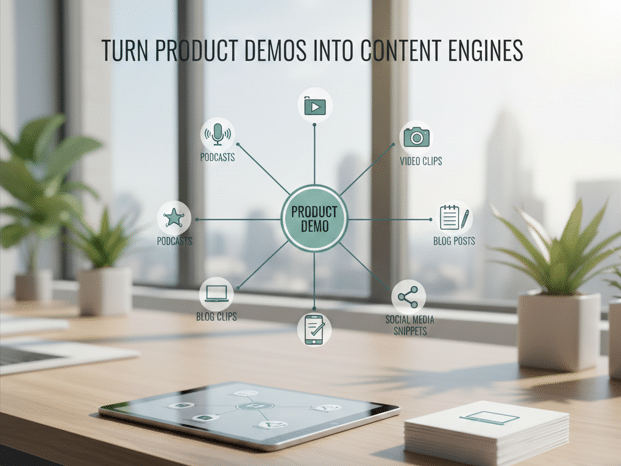
Rethinking Product Demos Beyond Sales
In many B2B organizations, product demos are treated as one-time sales events designed to close deals. Once the call ends, the demo often has no further purpose. This approach leaves a massive amount of value untapped. Product demos naturally combine storytelling, problem identification, solution explanation, and proof of value—all essential elements of high-performing content. By rethinking demos as strategic marketing assets rather than disposable sales tools, companies can unlock continuous content opportunities that support brand awareness, demand generation, and customer education.
Identifying High-Value Content Inside Every Demo
Every product demo is packed with insights that directly reflect buyer intent. The features you highlight, the problems you emphasize, and the questions prospects ask all reveal what your audience cares about most. These moments can be turned into blogs, social posts, explainer videos, or knowledge-base articles. For example, a five-minute walkthrough of a key feature can become a standalone video, while recurring demo questions can inspire FAQ blogs. Instead of guessing what content to create, demos give you real-world data straight from buyer conversations.
Converting Live Demos into Scalable On-Demand Content
Live demos are effective but limited in reach and scalability. Recording demos allows companies to transform them into evergreen, on-demand assets that can be used across the buyer journey. Full demo recordings can serve late-stage prospects, while edited clips can support early-stage education. On-demand demos also empower buyers who prefer self-service research, which is increasingly common in B2B purchasing. This approach ensures that your demo content continues working long after the live presentation ends.
Shifting from Feature-Focused to Value-Driven Education
One common mistake is turning demos into feature-heavy sales pitches. To function as content engines, demos must focus on outcomes, not just functionality. Educational demo content explains why a problem exists, how it impacts the business, and how your product solves it in practical terms. This type of content builds trust and credibility while positioning your brand as a problem-solver. When prospects learn from your demos—even if they are not ready to buy—you stay top of mind when the decision-making moment arrives.
Strengthening Sales and Marketing Alignment Through Demos
Product demos sit at the intersection of sales and marketing, making them ideal collaboration tools. Sales teams know which demo moments spark interest, where prospects hesitate, and what objections arise most often. Marketing teams can use these insights to create targeted content that preempts objections and educates leads before sales conversations begin. This alignment shortens sales cycles, improves lead quality, and ensures consistent messaging across all touchpoints.
Amplifying Reach Through Multi-Channel Distribution
Repurposed demo content should not live in a single place. A strong distribution strategy turns demos into multi-channel growth drivers. Blog posts derived from demos can boost organic search visibility, while short demo clips perform well on LinkedIn and other professional platforms. Demo insights can also be integrated into email nurture campaigns, sales follow-ups, and customer onboarding materials. Each channel reinforces the same core message, increasing impact without duplicating effort.
Optimizing and Scaling Demo Content with Performance Data
To truly function as content engines, demo-based assets must be continuously optimized. Tracking engagement metrics—such as video watch time, content interactions, and influenced pipeline—reveals which demo segments resonate most. These insights help teams refine messaging, prioritize high-impact features, and identify content gaps. Over time, this data-driven approach allows companies to scale demo content strategically, ensuring it evolves alongside customer needs and market trends.
Key Ways to Repurpose Product Demos
- Break demo recordings into short, feature-focused video clips
- Turn common demo questions into SEO-optimized blog posts
- Use demo screenshots and quotes for social media content
- Build email nurture sequences based on demo use cases
- Create case studies and success stories from demo discussions
Conclusion
Product demos are far more than sales presentations—they are powerful content assets waiting to be activated. By repurposing demos into blogs, videos, educational resources, and sales enablement materials, B2B companies can maximize their value and reach. When aligned with sales insights, distributed across channels, and optimized with performance data, product demos become scalable content engines that educate buyers, build trust, and drive long-term business growth.
