



Introduction
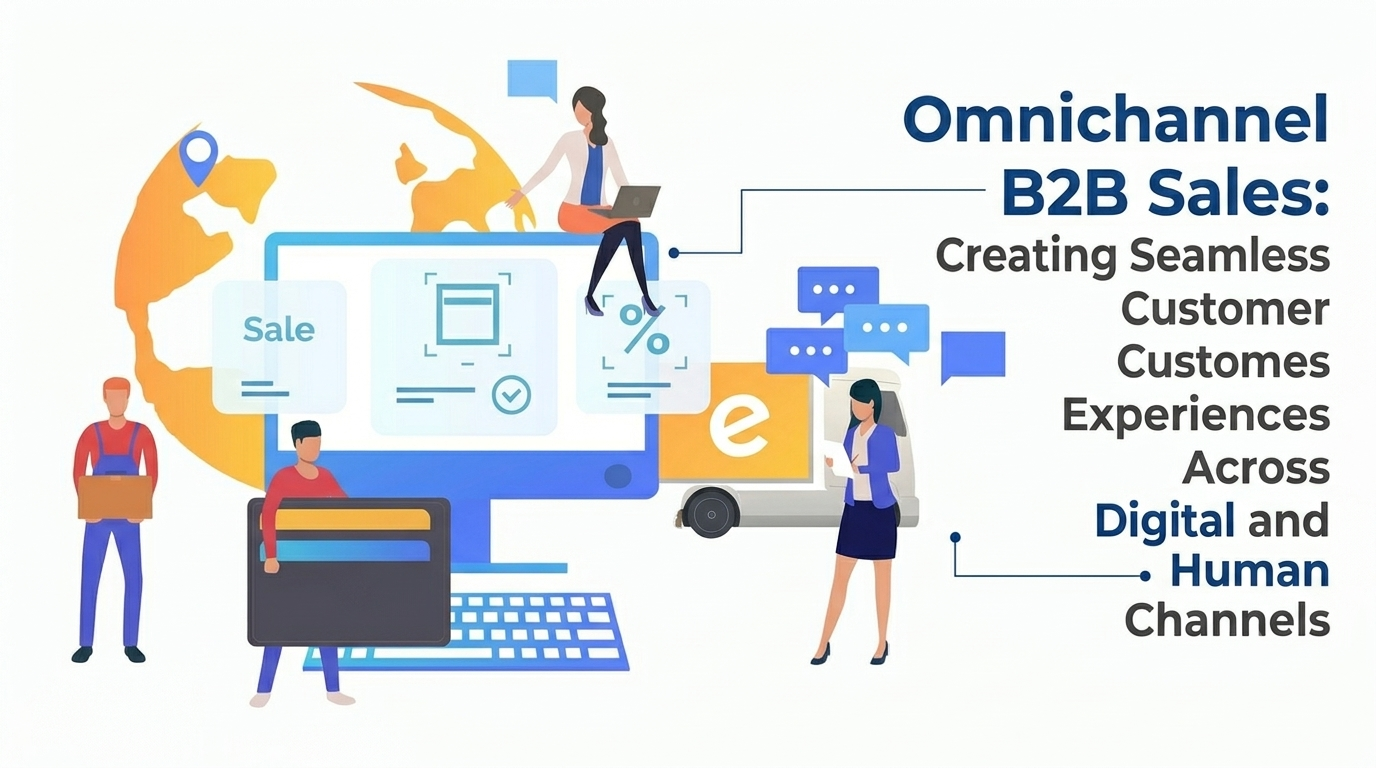
The B2B sales landscape is evolving rapidly as businesses increasingly adopt digital technologies to improve customer engagement, streamline sales processes, and drive revenue growth. Omnichannel B2B Sales has emerged as an important strategy for organizations looking to create seamless customer experiences across digital and human communication channels. Today’s B2B buyers expect convenient, personalized, and consistent interactions, whether they are researching products online, engaging with sales representatives, attending virtual demonstrations, or communicating through email and social media. By integrating these touchpoints into a unified sales strategy, businesses can improve customer engagement, strengthen relationships, and create more effective purchasing journeys.
The B2B sales landscape is evolving rapidly as businesses increasingly adopt digital technologies to improve customer engagement, streamline sales processes, and drive revenue growth. Today’s B2B buyers expect more than traditional sales interactions. They want convenient, personalized, and consistent experiences across multiple communication channels, whether they are researching products online, interacting with sales representatives, attending virtual demonstrations, or communicating through email and social media. This shift has made omnichannel B2B sales an essential strategy for organizations looking to build stronger customer relationships and remain competitive in a digitally connected marketplace.
Omnichannel B2B sales focuses on creating a unified customer experience across digital and human interaction channels. Unlike traditional multichannel selling, where businesses operate different sales channels independently, an omnichannel approach connects these channels to provide a seamless and consistent buying journey. By integrating websites, CRM platforms, email campaigns, social media, virtual meetings, sales representatives, and customer support systems, organizations can ensure that buyers receive relevant information and consistent assistance throughout their purchasing journey.
As B2B purchasing decisions become more complex and involve multiple stakeholders, companies must rethink how they engage prospects and existing customers. A well-designed omnichannel sales strategy enables businesses to understand customer preferences, deliver personalized interactions, and maintain continuity across every touchpoint. It also helps sales teams identify opportunities, improve engagement, shorten sales cycles, and create long-term business relationships.
Understanding Omnichannel B2B Sales
Omnichannel B2B sales is a customer-centric sales approach that integrates multiple digital and traditional communication channels into a connected buying experience. It allows potential customers to interact with a business through their preferred channels without losing the context of previous conversations or activities. For example, a prospect might discover a product through a LinkedIn campaign, visit the company’s website to explore its features, download a product brochure, attend a virtual demonstration, and eventually connect with a sales representative to discuss pricing and implementation requirements.
In a traditional sales environment, these interactions may be managed by separate departments or disconnected systems. This can result in repeated conversations, inconsistent information, delayed responses, and missed opportunities. An omnichannel B2B sales strategy addresses these challenges by connecting customer information and communication history across different platforms. As a result, sales representatives gain better visibility into buyer interests, previous interactions, and purchasing requirements.
The primary objective of omnichannel selling is not simply to increase the number of available communication channels. Instead, it is to make those channels work together effectively. Businesses can combine digital convenience with human expertise to create a more responsive, personalized, and efficient B2B buying experience.
Why Omnichannel Sales Is Becoming Important in B2B Markets
B2B buyers now use several digital and offline channels before making purchasing decisions. They research vendors, compare solutions, review customer testimonials, participate in webinars, and consult internal stakeholders before engaging in detailed sales discussions. This behavior requires businesses to provide consistent information and support throughout the entire buying journey.
One of the major reasons omnichannel B2B sales is gaining importance is the increasing demand for personalized customer experiences. Buyers expect companies to understand their business challenges, industry requirements, and specific purchasing objectives. Generic sales messages and repetitive follow-ups are less effective when customers have access to extensive product information and alternative suppliers through digital channels.
Another important factor is the growing complexity of B2B purchasing decisions. Enterprise purchases often involve procurement teams, technical experts, finance departments, and senior decision-makers. Each stakeholder may prefer a different communication channel and require different information. An integrated omnichannel approach helps businesses coordinate these interactions and maintain consistent communication with all relevant stakeholders.
Furthermore, digital transformation has increased the number of tools available to sales and marketing teams. CRM systems, marketing automation platforms, sales intelligence solutions, and customer engagement technologies allow businesses to collect and analyze customer information. When these technologies are properly integrated, organizations can use the resulting insights to improve sales productivity and deliver more relevant customer experiences.
The Role of Digital Channels in Omnichannel B2B Sales
Digital channels play a significant role in modern B2B sales because they allow buyers to research solutions, evaluate vendors, and interact with businesses at their convenience. A strong omnichannel strategy uses digital platforms to support every stage of the customer journey, from initial awareness to final purchase and post-sales engagement.
Website and Digital Content Platforms
A company’s website is often one of the first interaction points for potential B2B customers. Buyers visit websites to understand products and services, explore technical specifications, review case studies, compare solutions, and evaluate the company’s industry expertise. An informative and user-friendly website can help businesses establish credibility and encourage prospects to take the next step.
Organizations should create valuable digital content such as blogs, whitepapers, product guides, comparison articles, webinars, and customer success stories. This content helps answer buyer questions while improving organic search visibility. Search engine optimization also plays an important role by making relevant content discoverable when potential customers search for industry solutions, business services, and technology products.
Email Marketing and Automated Communication
Email remains an important communication channel in B2B sales because it supports personalized engagement and long-term lead nurturing. Businesses can use email campaigns to share relevant content, communicate product updates, invite prospects to webinars, and provide information based on customer interests.
Marketing automation platforms can help organizations deliver targeted email communication based on buyer behavior, industry, company size, and engagement history. For example, a prospect who downloads a technical whitepaper may receive additional educational content, while someone who requests a product demonstration may receive more focused communication from the sales team.
However, successful email engagement requires relevance and timing. Businesses should avoid sending repetitive promotional messages and instead focus on providing useful information that helps buyers make informed purchasing decisions.
Social Media and Professional Networking Platforms
Professional networking platforms, particularly LinkedIn, have become valuable channels for B2B lead generation, brand awareness, and relationship building. Sales representatives can use these platforms to identify potential decision-makers, participate in industry discussions, share valuable insights, and establish professional credibility.
Social selling allows sales teams to build relationships before initiating direct sales conversations. By sharing relevant content and engaging with prospects’ professional interests, representatives can create meaningful interactions that support the overall buying journey.
Integrating social media engagement with CRM platforms can also help businesses maintain better visibility into prospect interactions and coordinate follow-up activities.
Virtual Meetings, Webinars, and Product Demonstrations
Virtual communication channels have made it easier for businesses to connect with customers across different geographical locations. Video conferencing, online product demonstrations, and webinars allow sales representatives to explain complex solutions, answer technical questions, and engage multiple stakeholders without requiring physical meetings.
These channels are particularly useful for organizations selling enterprise software, IT infrastructure solutions, cloud services, cybersecurity products, and other complex business offerings. They provide opportunities to demonstrate product capabilities while allowing buyers to interact directly with subject matter experts.
When virtual engagement is connected with CRM and sales enablement systems, organizations can maintain meeting records, track customer requirements, and ensure that relevant follow-up actions are completed.
The Importance of Human Interaction in Omnichannel Selling
Although digital channels provide convenience and accessibility, human interaction remains an important part of the B2B buying experience. Business purchases often involve significant financial commitments, operational changes, and long-term relationships. Buyers therefore value professional guidance, technical expertise, and personalized recommendations before making important decisions.
Sales representatives help customers understand how a particular solution addresses their business challenges. They can identify requirements, explain complex product features, address concerns, negotiate commercial terms, and recommend suitable implementation approaches. These interactions help build trust and confidence, particularly when purchasing decisions involve multiple stakeholders.
Human engagement also becomes important when customers encounter complex problems or require customized solutions. Automated systems can provide basic information and handle routine requests, but experienced sales professionals can interpret business requirements and offer context-specific recommendations.
An effective omnichannel B2B sales strategy combines the efficiency of digital communication with the relationship-building capabilities of human interaction. This balance enables businesses to provide self-service convenience when customers need it while ensuring expert assistance remains available when required.
How CRM Integration Supports Omnichannel B2B Sales
Customer Relationship Management (CRM) systems are central to building an effective omnichannel B2B sales strategy. They provide a centralized platform for managing customer information, tracking sales activities, recording communication history, and monitoring opportunities across different channels.
When CRM systems are integrated with websites, email marketing platforms, social media tools, customer support applications, and sales engagement solutions, businesses can develop a more complete understanding of customer interactions. Sales representatives can review previous conversations, identify content engagement, understand customer requirements, and personalize their next interaction.
For example, if a prospect attends a webinar, visits a product page, and subsequently requests a consultation, the sales team can use this information to prepare a more relevant discussion. Instead of starting the conversation without context, representatives can address the prospect’s demonstrated interests and potential business challenges.
CRM integration also improves coordination between sales and marketing departments. Marketing teams can identify engagement patterns and share qualified leads with sales representatives, while sales teams can provide feedback about lead quality and customer objections. This alignment helps organizations create more consistent communication and improve the overall customer experience.
Personalization: The Foundation of a Successful Omnichannel Strategy
Personalization is one of the most important elements of modern B2B sales. Buyers expect businesses to understand their specific requirements instead of delivering generic product recommendations and marketing messages. An omnichannel strategy enables organizations to use customer data and interaction history to make communication more relevant across different touchpoints.
Businesses can personalize sales engagement using information such as industry, company size, business objectives, previous purchases, product interests, and content engagement. For instance, a technology company targeting financial services organizations may emphasize data security, regulatory requirements, and system reliability, while its communication with manufacturing companies may focus on operational efficiency and process automation.
Artificial intelligence and customer analytics can further improve personalization by identifying patterns in customer behavior and recommending relevant next steps. However, businesses must ensure that customer information is collected and used responsibly, with appropriate consent, access controls, and privacy safeguards.
A consistent personalization strategy helps organizations demonstrate that they understand their customers’ business priorities. It also improves the relevance of communication, strengthens engagement, and supports more productive sales conversations.
Using Artificial Intelligence to Improve Omnichannel B2B Sales
Artificial intelligence is becoming an important technology for improving B2B sales operations. AI-powered tools can analyze customer interactions, identify buying signals, automate repetitive activities, and help sales representatives prioritize high-potential opportunities.
AI-driven sales intelligence platforms can analyze information from multiple sources to help businesses identify potential customers and understand their purchasing interests. Predictive analytics can support lead scoring by evaluating engagement patterns, account characteristics, and historical sales data. These insights allow sales teams to focus their attention on prospects who demonstrate stronger buying potential.
AI-powered chatbots and virtual assistants can also support customer engagement by answering common questions, providing product information, and directing prospects to relevant resources. When a query requires detailed consultation, the system can help connect the prospect with an appropriate sales representative.
Another valuable application is AI-assisted personalization. Sales teams can use AI tools to prepare relevant email drafts, summarize customer conversations, identify follow-up opportunities, and recommend content based on buyer interests.
However, AI should support rather than completely replace human sales expertise. Businesses must maintain appropriate human oversight, particularly when handling sensitive customer information, complex negotiations, and high-value purchasing decisions.
Creating a Seamless B2B Customer Journey Across Channels
A successful omnichannel B2B sales strategy requires businesses to understand how customers move between different communication channels during the buying process. The experience should remain consistent regardless of whether a prospect interacts with a digital platform, communicates through email, attends a virtual meeting, or speaks with a sales representative.
The customer journey generally begins with awareness, when potential buyers discover a company through search engines, social media, industry publications, or referrals. During the consideration stage, they explore product information, compare vendors, review case studies, and evaluate available solutions. At this stage, businesses should provide educational resources and relevant engagement opportunities.
As prospects move toward the decision stage, they may request product demonstrations, pricing information, technical consultations, and customized proposals. Sales representatives should have access to the customer’s previous interactions to avoid repetitive discussions and provide relevant recommendations.
The journey continues after the purchase. Customers may require onboarding assistance, implementation support, technical guidance, and account management services. Connecting post-sales support with the same customer information used by sales and marketing teams helps businesses maintain continuity and build long-term relationships.
By understanding and optimizing every stage of the customer journey, organizations can reduce friction, improve communication, and create a more consistent B2B buying experience.
Challenges Businesses Face When Implementing Omnichannel B2B Sales
Although omnichannel selling provides significant opportunities, implementing it successfully requires careful planning and coordination. One of the most common challenges is disconnected technology systems. Businesses often use different platforms for CRM, marketing automation, customer support, sales engagement, and analytics. When these systems do not share information effectively, teams may struggle to maintain a unified view of customer interactions.
Another challenge is maintaining consistent messaging across channels. Different departments may communicate with the same customer without having access to shared information. This can lead to conflicting product details, duplicated follow-ups, and inconsistent customer experiences. Organizations need standardized communication processes and centralized customer information to address this issue.
Data quality and privacy are also important considerations. Omnichannel sales strategies depend on accurate customer information, but outdated records, duplicate contacts, and incomplete engagement histories can affect personalization and decision-making. Businesses should establish data governance practices, regularly update CRM records, and follow applicable data protection requirements.
Additionally, employees may need training to adopt new technologies and workflows. Sales representatives must understand how to use integrated platforms, interpret customer insights, and coordinate interactions across digital and human channels. Without proper training and organizational alignment, even advanced sales technologies may fail to deliver the expected business value.
Best Practices for Building an Effective Omnichannel B2B Sales Strategy
Businesses should begin by mapping the complete B2B customer journey and identifying the channels customers use during different stages of the purchasing process. This helps organizations understand where communication gaps exist and which touchpoints require improvement.
The next step is to integrate essential business systems, particularly CRM, marketing automation, sales engagement, and customer support platforms. A connected technology environment helps teams access relevant customer information and maintain continuity across interactions.
Organizations should also define clear responsibilities for sales, marketing, and customer success teams. Each department should understand how its activities contribute to the overall customer experience. Regular communication and shared performance objectives can help eliminate departmental silos and improve coordination.
Another important practice is to focus on customer preferences rather than simply increasing the number of communication channels. Some buyers may prefer email and self-service resources, while others may require direct consultations and technical demonstrations. Businesses should provide flexible engagement options and make it easy for customers to move between channels.
Finally, organizations should continuously measure performance and improve their approach based on customer feedback and sales data. Omnichannel selling is not a one-time technology implementation. It is an ongoing business strategy that requires regular evaluation, optimization, and adaptation to changing buyer expectations.
Measuring the Success of Omnichannel B2B Sales
Measuring performance is essential for understanding whether an omnichannel strategy is improving customer engagement and business results. Organizations should evaluate both channel-level performance and the overall customer journey instead of focusing only on individual campaign metrics.
Lead conversion rates help businesses understand how effectively prospects move from initial engagement to qualified opportunities and completed purchases. Customer acquisition cost provides insight into the resources required to acquire new customers, while sales cycle length helps organizations evaluate how efficiently opportunities progress through the pipeline.
Customer engagement metrics, such as email interactions, website activity, webinar participation, and meeting attendance, can provide useful information about channel effectiveness. However, these metrics should be interpreted in context because a high level of digital engagement does not always translate into purchasing intent.
Customer retention, repeat purchase rates, customer lifetime value, and customer satisfaction are also important indicators of long-term success. By analyzing these measurements together, businesses can identify which channels contribute to stronger relationships and better revenue outcomes.
Organizations should use CRM dashboards and sales analytics tools to monitor these metrics regularly. This enables sales leaders to identify performance gaps, optimize resource allocation, and make informed decisions about future sales investments.
The Future of Omnichannel B2B Sales
The future of B2B sales will be shaped by deeper technology integration, artificial intelligence, data-driven personalization, and evolving buyer expectations. Customers will continue to expect flexible purchasing experiences that combine digital convenience with access to knowledgeable sales professionals.
AI-powered sales assistants, predictive analytics, conversational interfaces, and intelligent CRM platforms are expected to play an increasingly important role in helping businesses understand customer behavior and improve sales engagement. These technologies can reduce administrative workloads and allow sales representatives to dedicate more time to strategic conversations and relationship development.
Self-service buying experiences are also likely to become more sophisticated. B2B customers increasingly value the ability to research products, access documentation, compare solutions, and complete routine purchasing activities independently. At the same time, complex enterprise purchases will continue to require human expertise, consultation, and relationship management.
Another important development will be the growing focus on connected customer data. Businesses that successfully integrate sales, marketing, and customer success information will be better positioned to deliver consistent experiences throughout the customer lifecycle.
Ultimately, organizations that combine intelligent automation, connected technology, and meaningful human engagement will be better equipped to adapt to the changing B2B sales environment.
Conclusion
Omnichannel B2B sales has become an important strategy for organizations looking to create seamless customer experiences across digital and human communication channels. As buyer expectations evolve and purchasing journeys become more complex, businesses can no longer depend on disconnected sales activities or isolated communication platforms. They need an integrated approach that connects websites, email marketing, social media, CRM systems, virtual meetings, sales representatives, and customer support into a unified customer experience.
By combining digital convenience with personalized human engagement, organizations can improve lead generation, strengthen customer relationships, enhance sales productivity, and create more efficient purchasing journeys. CRM integration, artificial intelligence, customer analytics, and coordinated sales and marketing processes further support this transformation by helping businesses understand buyer behavior and deliver relevant interactions at every stage.
Moving forward, successful B2B organizations will be those that prioritize customer needs, invest in connected sales technologies, and continuously optimize their omnichannel strategies. Creating a seamless experience across every touchpoint is not just about improving communication; it is about building trust, delivering consistent value, and establishing long-term customer relationships that contribute to sustainable business growth.
