



Discovery Is Now Algorithm-Driven, Not Search-Driven
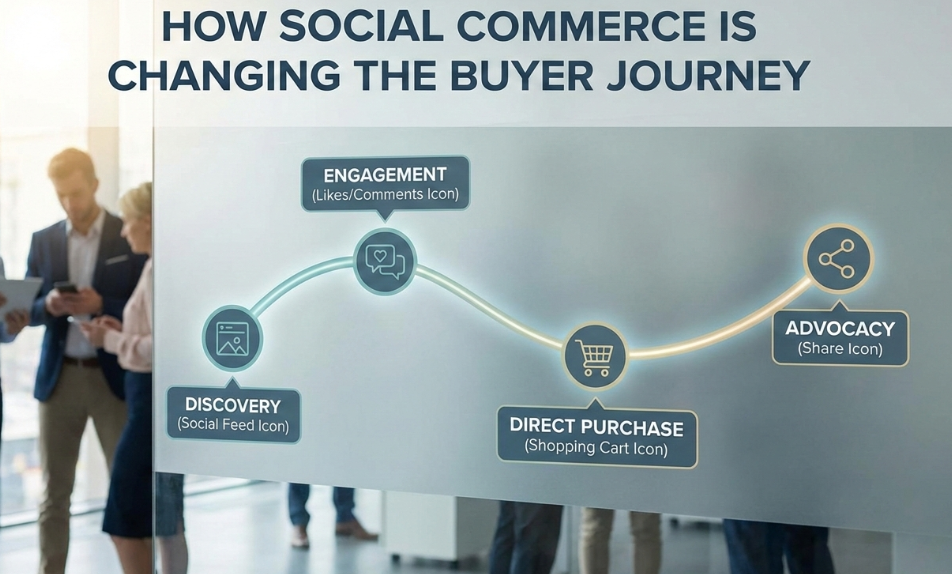
Traditionally, the buyer journey began with an active search—users typed queries into search engines to find solutions. Social commerce has reversed this behavior. Today, discovery is largely passive and algorithm-driven. Platforms like Instagram, TikTok, and Facebook continuously analyze user behavior, interests, watch time, and engagement patterns to surface products that align with individual preferences. As a result, consumers often discover products before they realize they need them. This shift has transformed the awareness stage into an entertainment-led experience, where scrolling through social feeds doubles as product exploration.
Visual Storytelling Replaces Static Product Pages
Social commerce thrives on visual storytelling. Instead of relying on long descriptions and technical specifications, brands now use short videos, reels, carousels, and stories to communicate value. Product benefits are demonstrated in real-life scenarios, making them easier to understand and emotionally relatable. This immersive content allows buyers to imagine how a product fits into their lifestyle, which significantly influences purchasing decisions. The buyer journey becomes more intuitive, driven by emotions and visuals rather than rational comparison alone.
Influencers Act as Decision Catalysts
Influencers and content creators play a central role in accelerating the buyer journey. Unlike traditional advertising, creator content feels personal, relatable, and trustworthy. Buyers see products being used by people they follow and admire, which reduces skepticism and shortens the consideration phase. Micro-influencers, in particular, have strong community trust and high engagement rates, making their recommendations highly persuasive. In social commerce, influencers function as modern brand ambassadors and sales consultants rolled into one.
Community Engagement and Social Proof Reduce Risk
In social commerce, buying is rarely a solitary decision. Likes, comments, shares, reviews, and tagged posts provide instant validation. Buyers can scroll through comment sections to see real questions, feedback, and experiences from other customers. This open, community-driven feedback reduces perceived risk and uncertainty. When buyers see others enjoying and endorsing a product, confidence increases, and hesitation decreases. Social proof now replaces lengthy research and comparison processes.
Seamless In-App Shopping Shortens the Path to Purchase
One of the most impactful changes social commerce brings is the removal of friction in the checkout process. In-app shopping features allow users to browse, select, and pay without leaving the platform. This eliminates distractions and reduces drop-off rates caused by redirects or complex checkout steps. Stored payment information and one-click purchasing create a sense of convenience that encourages impulse buying. The buyer journey becomes shorter, smoother, and conversion-focused.
Livestream Shopping Creates Urgency and Interaction
Livestream shopping has added a real-time, interactive layer to social commerce. Brands and creators can showcase products live, answer questions instantly, and demonstrate features in action. Limited-time offers, exclusive discounts, and countdown deals create urgency, pushing buyers to act quickly. This format mimics the in-store shopping experience while adding entertainment value. Livestreams often move buyers from awareness to purchase in a single session, dramatically accelerating the journey.
Personalization Shapes Individual Buyer Paths
Social commerce platforms leverage data and AI to personalize each buyer’s experience. Product recommendations are tailored based on previous interactions, viewed content, and purchasing behavior. This level of personalization ensures that buyers are exposed to highly relevant products, increasing the likelihood of conversion. Instead of following a linear funnel, each buyer experiences a unique journey shaped by their preferences, making social commerce more adaptive and effective than traditional e-commerce.
Post-Purchase Engagement Extends the Buyer Lifecycle
The buyer journey in social commerce does not end at checkout—it continues publicly. Customers often share unboxing videos, post reviews, tag brands, and engage in follow-up conversations. Brands can respond directly, strengthening relationships and building loyalty. This post-purchase visibility influences new buyers and fuels organic growth. Social commerce transforms customers into content creators and brand advocates, extending the buyer journey into a continuous engagement cycle.
Key Ways Social Commerce Is Transforming the Buyer Journey
- Product discovery happens through personalized social feeds
- Content functions as both marketing and storefront
- Influencers accelerate trust and decision-making
- Social proof replaces traditional product research
- In-app checkout reduces friction and abandonment
- Livestreams create urgency and real-time interaction
- AI personalization delivers relevant product recommendations
- Post-purchase engagement drives loyalty and advocacy
Conclusion
Social commerce is fundamentally reshaping the buyer journey by blending entertainment, community, and commerce into a single experience. Buyers no longer move through a slow, linear funnel—instead, they discover, evaluate, and purchase products within moments on social platforms they already trust and enjoy. For brands, success in social commerce requires more than just selling products; it demands authentic storytelling, creator partnerships, seamless shopping experiences, and ongoing engagement. As social platforms continue to evolve, businesses that understand and adapt to this new buyer journey will gain a powerful competitive advantage in the digital marketplace.
